
This article examines the best Writesonic alternatives for 2026, concentrating on tools that enhance content creation, quality, and overall SEO performance.
Writesonic is an all‑in‑one AI content and Generative Engine Optimization (GEO) platform designed to enhance brand visibility across various AI engines, including ChatGPT, Claude, and Gemini, beyond traditional search engines.
It continuously monitors how often AI engines interact with your content, identifying brand mentions, citations, and areas where competitors excel.
For content creators and content teams, Writesonic has been a popular choice, but the market offers numerous alternatives for creating high-quality content and improving SEO.
These alternatives aim to meet diverse content needs and content strategies, ensuring you can optimize content effectively.
Why Look for Writesonic Alternatives?
While Writesonic is a capable AI writing tool, it may not fulfill all the advanced SEO and content optimization needs of every user.
Some content marketers might find its SEO features limited compared to more comprehensive content creation tools.
Others may seek alternatives for SEO that offer better content planning capabilities, diverse content type options, or superior AI-driven content generation.
Exploring the best Writesonic alternatives allows content creators to discover tools that better align with their specific content needs, budget, and content strategies, ensuring they can create content that drives results.
By considering alternatives for SEO, businesses can optimize content more effectively and achieve better SEO optimization.
What We Looked For (and Why It Matters)
1. Real SEO depth
SERP analysis, semantic recommendations, and content scoring that mirror how Google and AI assistants judge pages.
2. End‑to‑end content workflow
Smooth path from keyword research → outline → draft → on‑page optimization in one system.
3. Collaboration & integrations
Google Docs, WordPress/CMS integrations and seat‑based access so teams can work together.
4. Pricing and scalability
Transparent plans that scale with content volume and don’t throttle output too aggressively.
5. Trust and track record
Strong, verified ratings on sites like G2 and Capterra to prove reliability.
6. Tool strengths and usability
Whether the SEO tool is best‑in‑class at something, produces natural, useful AI content, and stays easy to use with clear pricing.
Quick Comparison between the best Writesonic Alternatives
| Tool | Best for | Starting price* |
AI & Search Coverage (short)
|
| RadarKit.ai | LLM visibility & AI search analytics | $29/mo Lite |
ChatGPT, Perplexity, Gemini, Copilot, Google AI modes.
|
| Frase.io | SEO + GEO content optimization | $98/mo |
Google SEO + optional AI search tracking add‑on.
|
| Copy.ai | Marketing copy & GTM workflows | From $29/mo Chat; free tier. |
Multi‑LLM chat & content generation.
|
| Clearscope | Content SEO scoring & briefs | $129/mo. |
Google SERP‑led keyword and content grading.
|
| Scalenut | Long‑form SEO content (Cruise Mode) | $49/mo. |
Google SERP analysis + SEO writing workflows.
|
| NeuronWriter | Affordable on‑page SEO editor | $23/mo. |
Google SERP NLP + content editor.
|
| Rytr | Cheap general AI writing | From $9/mo; free plan. |
Single‑LLM style short/long‑form generation. Its a writing tool and not a GEO tool.
|
| Jasper AI | Brand‑safe marketing content at scale | $69/mo. |
Multi‑channel content; SEO via integrations.
|
| Surfer SEO | SERP‑driven content optimization | $79/mo. |
Google SERP, NLP scoring, keyword clusters.
|
| ChatGPT Plus | General AI assistant & plugins | $20/mo. |
General web + plugins/browse; not purpose‑built SEO, but broad.
|
Top 10 Best Writesonic Alternatives for SEO
1. Radarkit.ai
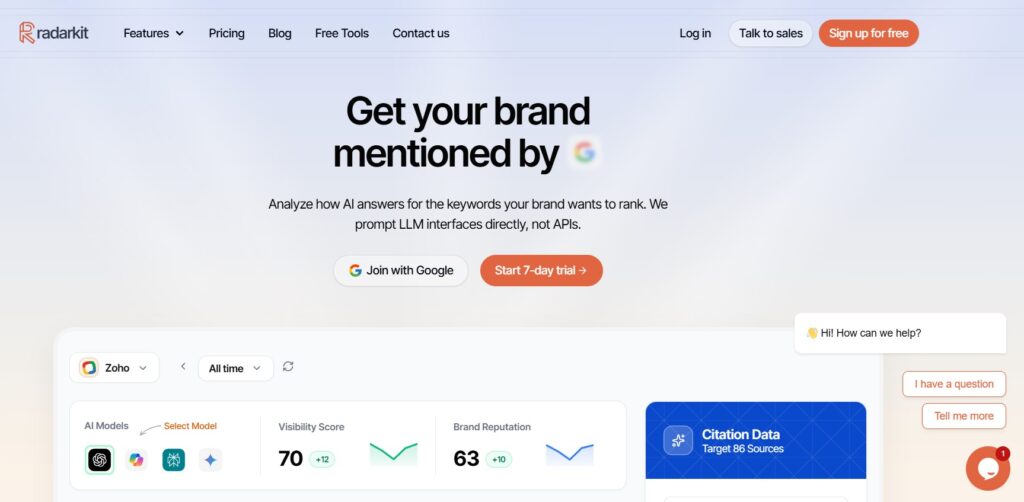
RadarKit.ai is an AI visibility tracker and search analytics platform that shows how your brand, pages, and competitors appear inside LLMs like ChatGPT, Perplexity, Gemini, Microsoft Copilot, and emerging Google AI modes.
Instead of just helping you write content like Writesonic, it focuses on measuring and improving how often you are mentioned, cited, and positioned in AI-generated answers for your target keywords, using real browser-based prompts rather than APIs so the data matches what end users actually see.
Alongside its core LLM visibility tracking, RadarKit connects with GA4 and Google Search Console to tie AI visibility back to traffic and SEO performance, and it ships free GEO/AI SEO tools such as an LLMS.txt checker and generator to help brands get technically “visible” to language models.
That makes RadarKit the best Writesonic alternatives, on the analytics side: you can use any writer for content production, then rely on RadarKit to audit whether that content is surfacing in AI assistants and to guide your AEO/GEO strategy.
Pros
- Built for LLM visibility tracking across ChatGPT, Perplexity, Gemini, Copilot and Google AI modes, so you see how brands rank inside AI answers, not just Google SERPs.
- Provides visibility scores, competitor share‑of‑voice, sentiment analysis, and backlink opportunity reports pulled from highly cited sources in AI outputs.
Cons
- Ecosystem is still new, with relatively few third‑party reviews and case studies compared to mature SEO suites.
- Data freshness and stability depend on live UI prompting, so model or interface changes can affect tracking unless you are on higher‑refresh plans
2. Frase.io
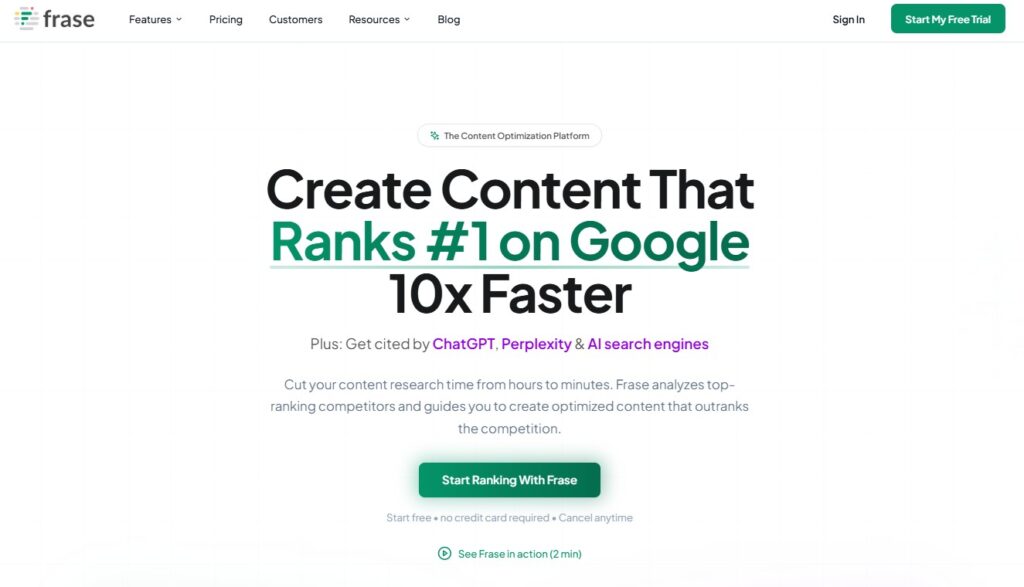
Frase.io is a robust tool like Writesonic that deserves consideration as one of the best Writesonic alternatives.
Frase offers a comprehensive suite of features for content creation and SEO optimization. It helps content creators conduct in-depth keyword research, analyze competitor content, and generate high-quality content briefs.
With Frase, you can streamline your content writing workflow from initial research to final optimization.
This SEO tool utilizes AI to suggest relevant keywords, improve content quality, and ensure your content aligns with SEO best practices.
In 2025, having an AI writing tool like Frase will be invaluable for content teams seeking to enhance their SEO strategies and create content that drives results.
Pros
-
Strong content research and brief generation, pulling topics, headings, and questions directly from top‑ranking SERP pages, which speeds up SEO planning.
-
Combines editor, optimization suggestions, and AI writing in one workspace, reducing tool‑switching during keyword → outline → draft → optimization flows.
Cons
-
Weak native keyword research; users often need Ahrefs/SEMrush for full keyword and competition analysis.
-
AI writer is known to struggle with intros/conclusions and can introduce grammar issues, so articles require a human pass before publishing.
3. Copy.ai
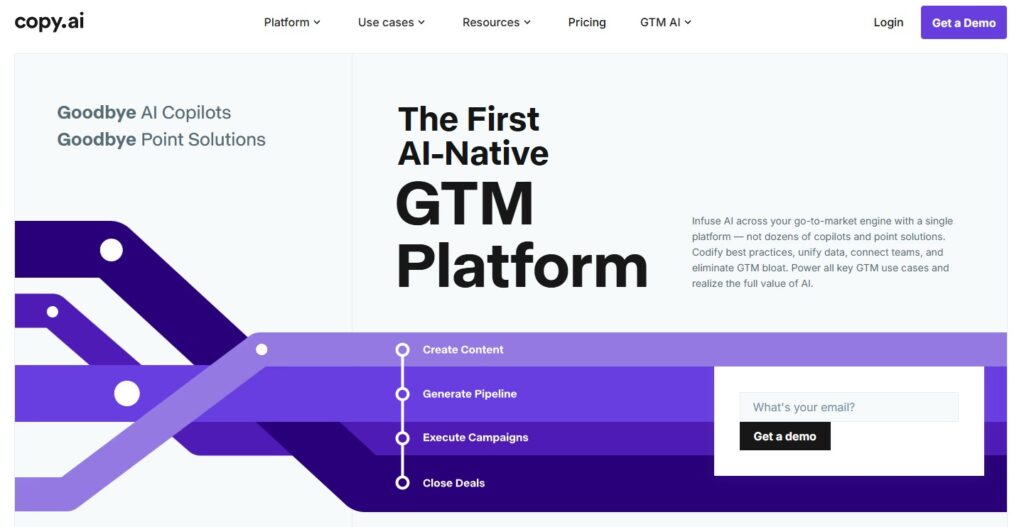
Copy.ai stands out as a strong contender among alternatives to Writesonic. As an AI-powered writing tool, Copy.ai excels at generating various types of content, from blog posts to social media updates.
It is particularly useful for marketers and content creators looking to quickly generate AI content and iterate on ideas.
Copy.ai simplifies the content creation process by providing numerous templates and tools for brainstorming, drafting, and refining content.
For those seeking an AI tool that can assist with diverse content needs and offer basic SEO capabilities, Copy.ai is a reliable choice.
Considering Copy.ai as best Writesonic alternatives can significantly boost content production and streamline workflows for content teams in 2025.
Pros
-
GTM‑focused platform with AI chat, content agents, and workflows that automate marketing copy, emails, and blog drafting at scale.
-
Multi‑model access plus many templates makes it efficient for teams needing lots of ads, social posts, and sales content fast.
Cons
-
Outputs can be generic or off‑brand, so high‑stakes pages still need editing and strong prompting to hit the mark.
-
Advanced plans get pricey for teams, and users report occasional workflow bugs and slower support than some competitors
4. Clearscope AI

Clearscope AI is a powerful SEO tool primarily focused on content optimization.
Unlike some AI writing tools that focus on generation, Clearscope excels in analyzing existing content and providing actionable insights to improve its SEO performance.
This SEO tool helps content creators identify relevant keywords, optimize content structure, and ensure the content quality meets the standards required for high search engine rankings.
For content marketers prioritizing data-driven SEO optimization, Clearscope is a must-consider best Writesonic alternatives.
By leveraging Clearscope’s insights, content teams can refine their content strategies and optimize content effectively for 2025 and beyond.
Pros
-
Very strong content scoring and SERP‑based recommendations, widely used by enterprise teams for on‑page SEO tuning.
-
Clean UI and simple A–F style grading make it easy for writers to align content with top‑ranking pages.
Cons
-
Pricing is high compared to newer SEO writers, which can limit access for freelancers or small agencies.
-
Focuses on optimization, not full AI drafting workflows, so you often pair it with another writer (like ChatGPT/Writesonic).
5. Scalenut AI

Scalenut AI provides a comprehensive solution for SEO and content marketing, making it a notable best Writesonic alternatives.
It offers a suite of tools for keyword research, content planning, AI content generation, and SEO optimization.
Scalenut’s AI-driven platform analyzes search engine results pages (SERPs) to identify the most relevant topics and keywords, helping content creators create content with a higher chance of ranking well.
The platform’s intuitive interface and robust features make it an excellent choice for content teams looking to streamline their content creation and SEO processes.
With Scalenut, you can effectively optimize content, improve content quality, and achieve better SEO optimization in 2025 and beyond.
Pros
-
Cruise Mode can generate long‑form SEO articles from keyword to draft with SERP‑informed outlines and NLP suggestions.
-
Offers an integrated keyword cluster engine plus content grading, useful for topical authority build‑out.
Cons
-
AI drafts still need pruning for repetition or “SEO fluff,” especially on competitive topics.
-
Interface and learning curve can feel heavier than simpler AI writers for one‑off blog posts.
6. NeuronWriter
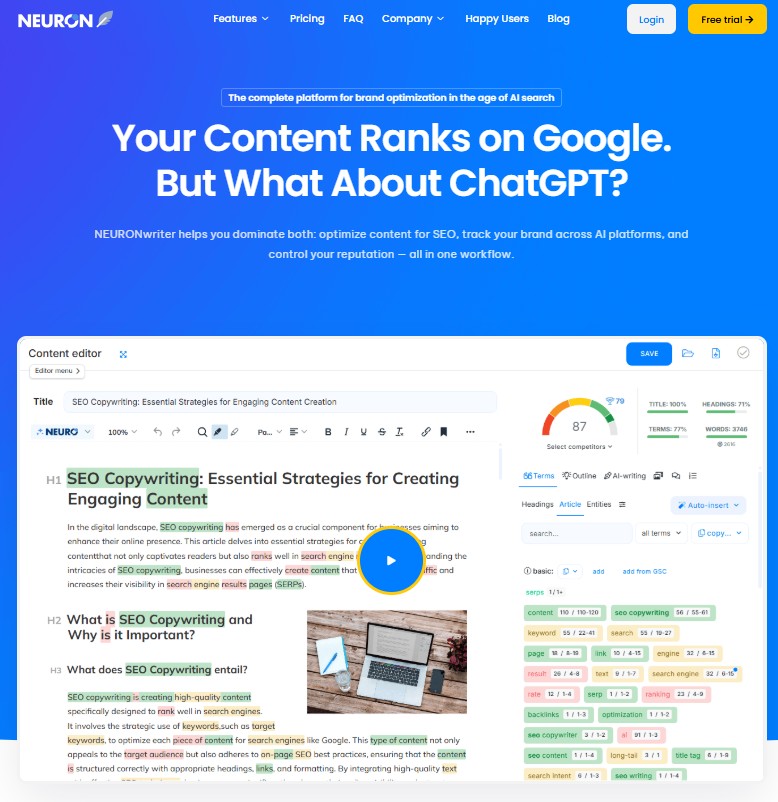
NeuronWriter is an innovative SEO tool designed to help content creators optimize content for specific keywords and target audiences, making it one of the best Writesonic alternatives.
This SEO tool analyzes top-ranking content for your target keywords and provides actionable recommendations to improve your content’s SEO performance.
It offers features like content scoring, keyword suggestions, and competitive analysis, allowing you to create content that aligns with search engine algorithms and user intent.
For content marketers focused on precision and data-driven SEO optimization, NeuronWriter is an excellent choice.
Pros
-
Affordable on‑page SEO editor with NLP terms, SERP analysis, and content scores; popular with small agencies and solo SEOs.
-
Helpful internal linking and outline tools geared specifically toward ranking in Google.
Cons
-
UI and UX feel less polished than premium tools, and workflows can be fiddly for teams.
-
AI writing is more basic; many users use NeuronWriter mainly for optimization over full drafting.
7. Rytr
Rytr is a user-friendly AI writing tool that serves as a best Writesonic alternatives for those seeking quick and efficient content generation.
It’s known for its simplicity and speed, allowing content creators to generate various types of content, including blog posts, social media copy, and product descriptions, in just a few clicks.
While Rytr may not offer the same level of advanced SEO features as some other alternatives, it is an excellent choice for those looking for a fast and affordable AI writing assistant.
For content teams needing to quickly create content without extensive SEO optimization, Rytr provides a valuable solution. Consider Rytr as one of the alternatives for 2025 to boost your content production.
Pros
-
Very low starting price and simple UX, good for budget AI writing across many templates.
-
Fast for generating short‑form copy like descriptions, emails, and simple blog sections.
Cons
-
Limited deep SEO features; you need external tools for SERP analysis, keyword mapping, and content scoring.
-
Output quality is more hit‑or‑miss than higher‑end tools, especially for long‑form or technical content.
8. Jasper AI
Jasper AI is a widely recognized AI writing tool that provides robust best Writesonic alternatives for businesses and content teams.
Known for its high-quality content generation capabilities, Jasper AI can assist in content creation for various formats, including blog posts, articles, social media posts, and marketing copy.
It uses sophisticated AI algorithms to understand user intent and generate content that is both engaging and SEO-friendly.
While it may be a bit pricier than some other alternatives, its features and performance make it a worthwhile investment for those prioritizing content quality and SEO optimization.
Pros
-
Built for brand‑safe marketing content with style guides, brand voice, and multi‑channel templates for blogs, ads, and emails.
-
Strong collaboration features and workflows for agencies and in‑house teams producing volume content.
Cons
-
More expensive than many AI writers; common comparison is $69/month vs around $20/month for ChatGPT Plus.
-
SEO features rely heavily on integrations (e.g., Surfer, others) rather than deep native SERP tooling.
9. Surfer SEO
Surfer SEO is a leading SEO tool that focuses on data-driven content optimization, making it one of the best Writesonic alternatives.
It analyzes top-ranking pages for your target keywords and provides actionable insights on how to improve your content’s SEO performance.
With Surfer SEO, content creators can identify relevant keywords, optimize content structure, and ensure their content aligns with search engine algorithms.
This SEO tool also offers features for keyword research, content planning, and competitive analysis. For content marketers prioritizing data-driven SEO optimization and content quality, Surfer SEO is an essential addition to their toolkit.
Pros
-
Mature SERP‑driven optimizer, combining keyword research, NLP entities, and content scoring in one dashboard.
-
Great for mapping clusters and optimizing existing posts to close gaps versus top‑ranking pages.
Cons
-
Full feature set can be expensive once you add content audits and more seats.
-
AI writing add‑ons are newer and not as central as the core optimization engine, so many teams still pair it with separate writers.
10. ChatGPT Plus
ChatGPT Plus is a versatile AI tool that can serve as a supplementary best Writesonic alternatives, particularly for brainstorming and initial content generation.
While not solely an SEO tool, ChatGPT Plus can assist with various content-related tasks, such as generating ideas, outlining articles, and drafting introductory paragraphs.
Its natural language processing capabilities make it a valuable assistant for content creators seeking to improve their content and explore new angles.
It’s important to note that content generated by ChatGPT Plus should be carefully reviewed and optimized for SEO using dedicated SEO tools.
Incorporating ChatGPT Plus into your content creation workflow can enhance productivity and creativity, especially when paired with specialized SEO optimization tools.
Pros
-
Very flexible general‑purpose AI that can ideate topics, outlines, drafts, and improve existing content across any niche.
-
Plugin/browsing capabilities (depending on configuration) help with light research and quick SERP‑like insight, making it a strong all-around writer.
Cons
-
No native SEO scoring, SERP comparison, or structured keyword workflows; you must bolt on your own process or external tools(such as radarkit.ai).
-
Output can drift from strict briefs without careful prompting and checklists, which matters for tightly optimized SEO pages.
How To Choose the Best Writesonic Alternatives
Start with your primary use case
Before comparing features, get brutally clear on what you actually need: long‑form SEO blogs, landing pages, social copy, or AI visibility tracking.
Once the main job is defined, it becomes obvious which tools are overkill and which ones are too generic for serious SEO work.
Decide how important integrated SEO is
Some of the best Writesonic alternatives behave like pure writers, while others layer on SERP analysis, NLP terms, and content scores that mirror how Google evaluates pages.
If rankings are the goal, prioritize platforms that connect keyword research, briefs, and optimization inside one workspace rather than relying on manual copy‑paste between tools.
Check limits and seats, not just headline price
The “from $X/month” badge is only useful if you know how many words, projects, prompts, and user seats you actually get.
For agencies and teams, seat‑based pricing and fair project limits often matter more than having the absolute cheapest plan on paper.
Look at learning curve and support
You want Writesonic alternatives which your writers and SEOs can adopt in days, not months, with a UI that doesn’t get in the way of publishing.
Check for tutorials, documentation, and real user reviews on places like G2 or AppSumo, because good support and steady updates usually matter more than one flashy feature.
Best Writesonic Alternatives for SEO Content Optimization – Our Recommendation
For SEO teams who care not just about what they publish but how often it actually shows up in AI answers, Radarkit.ai is the top recommendation in this list of best Writesonic alternatives.
Radarkit doesn’t try to replace your writer; it sits on top of your existing content stack and tracks how visible your brand and pages are across ChatGPT, Perplexity, Gemini, Copilot, and Google’s AI surfaces, turning that into visibility scores, competitor share‑of‑voice, and concrete backlink opportunities.
That makes it especially powerful in 2025, where rankings increasingly live inside LLMs as much as in the classic SERP, and where serious SEO now means measuring and optimizing for both Google and AI assistants, not just pushing out more AI‑written articles.
FAQ on Best Writesonic Alternatives
Is Writesonic still worth using in 2025?
Writesonic can still be a solid pick in 2025 if your main goal is cranking out decent drafts, ads, and basic SEO content quickly without babysitting the tool.
Just treat it as a speed layer, not a final‑publish engine: long‑form pieces usually need human editing, and if you care about deep SEO strategy or AI visibility, you’ll likely want to pair it with a more specialized tool on top.
Which alternative is best for solo bloggers or small businesses?
For solo bloggers and small businesses, a lean stack of Writesonic alternatives works best: pair a budget‑friendly SEO writer (like Frase or NeuronWriter) with Radarkit.ai to track how often your brand and posts appear in ChatGPT, Perplexity, and other AI assistants.
This keeps writing costs low while giving you visibility data and link‑opportunity insights that simple AI writers can’t provide.
What are the best Writesonic alternatives for SEO content in 2025?
For SEO teams focused on rankings and AI exposure, pairing an SEO writer (like Frase or Surfer) with Radarkit.ai for AI visibility tracking is one of the strongest setups.
Which AI tools help with both Google SEO and AI search?
Modern stacks combine SERP‑focused tools (Frase, Surfer, etc.) with Radarkit.ai, which reveals which sources AI models already trust for your topics