In this Hall AI review, we’ll take a closer look at the platform, what it does and how it works, and whether it makes sense for your business.
We’ll go over its key features, pricing structure, and a few solid alternatives, so you can see where it fits in today’s AI-driven search landscape.
You’ll also get a clear sense of how Hall AI can help your brand stay visible and competitive in 2025 and beyond.
So, without any further ado, let’s get started.
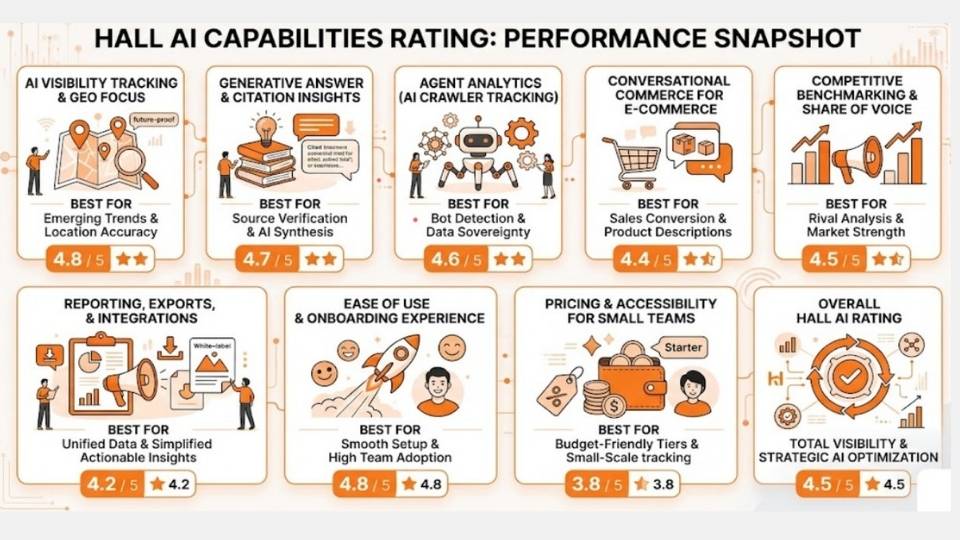
Quick Hall AI Capabilities Ratings
- AI visibility tracking and GEO focus: 4.8/5
- Generative answer and citation insights: 4.7/5
- Agent analytics (AI crawler tracking): 4.6/5
- Conversational commerce for e‑commerce: 4.4/5
- Competitive benchmarking and share of voice: 4.5/5
- Reporting, exports, and integrations: 4.2/5
- Ease of use and onboarding experience: 4.8/5
- Pricing and accessibility for small teams: 3.8/5
- Overall Hall AI rating: 4.5/5
What is Hall AI and What Makes it Stand Out?
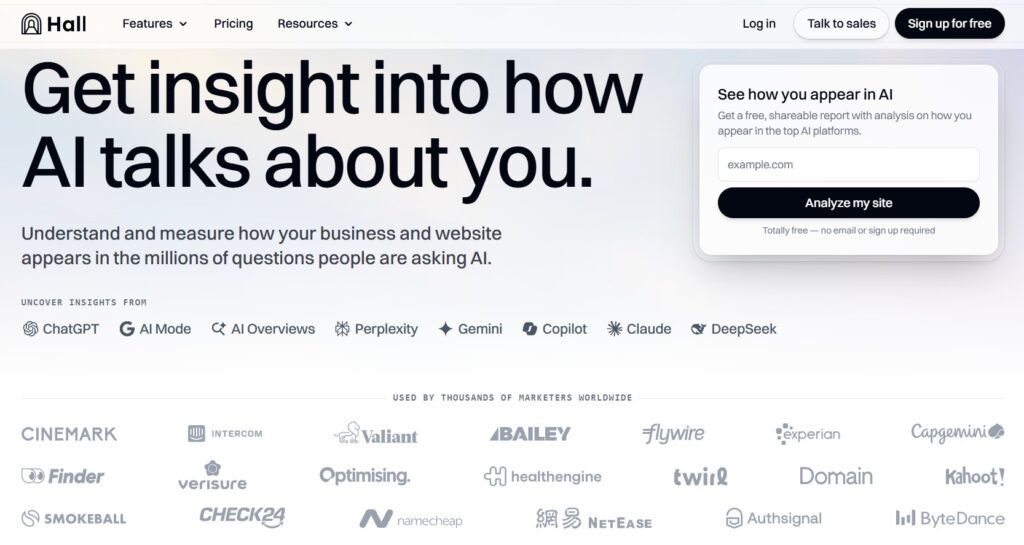
Hall AI is a specialized platform from usehall.com built to monitor and optimize brand presence in AI-generated search results. It scans responses from major AI tools like ChatGPT, Perplexity, Gemini, Claude, Copilot, and even AI Overviews in traditional engines, tracking metrics such as mention frequency, sentiment, share of voice, and website citations across vast numbers of daily queries.
What makes Hall AI different lies in its forward-thinking approach to Generative Engine Optimization (GEO) and AI Engine Optimization (AEO).
Beyond standard tracking, it delivers agent analytics that show exactly how AI crawlers engage with your site and tie those interactions to real-world conversation performance.
You also get custom prompt monitoring, conversational commerce insights (like product recommendations in AI shopping scenarios), and actionable reports to refine content strategies, features that set it apart from legacy SEO tools still catching up to the AI era.
The platform keeps things accessible with a free Lite plan offering 25 questions and 300 answers per month, alongside paid tiers for deeper analysis.
Its clean dashboard, prompt suggestions, and quick setup make it a practical choice for marketers aiming to stay ahead in AI-driven search landscapes.
Who Benefits from Using Hall AI
Here are the teams that benefit from using Hall AI
Marketing Managers
Marketing managers use Hall AI to monitor real-time AI responses from tools like ChatGPT and Perplexity, spotting how campaigns perform in generative search.
Visibility metrics and sentiment insights let them tweak content for better reach, turning AI data into smarter promotion tactics that boost engagement across channels.
SEO Specialists
SEO specialists leverage Hall AI’s agent analytics to understand AI crawler patterns and their impact on conversation rankings.
It connects traditional SEO with GEO and AEO, helping optimize for citations, share of voice, and prompt-based visibility, essential as search shifts from keywords to AI narratives.
Digital Agencies
Digital agencies benefit by scaling client monitoring across multiple brands with Hall AI’s custom prompts and reports.
They deliver data-backed GEO strategies, track competitor performance, and prove ROI through sentiment trends, making it easier to win pitches and retain clients in the AI search space.
Small Business Owners
Small Business owners track AI-driven shopping recommendations and overviews with Hall AI’s simple dashboard, no tech team required.
It highlights revenue risks from poor visibility and suggests quick fixes, keeping small operations competitive as consumers rely more on AI for decisions.
Brand Managers
Brand managers catch sentiment shifts early across AI platforms using Hall AI’s comprehensive analysis. Custom tracking and alerts enable fast reputation adjustments, ensuring positive perceptions dominate as AI shapes how audiences discover and trust brands.
Hall AI Review: Key Features Explained
Here is an explanation of each feature offered by Hall AI review.
Generative Answer Insights
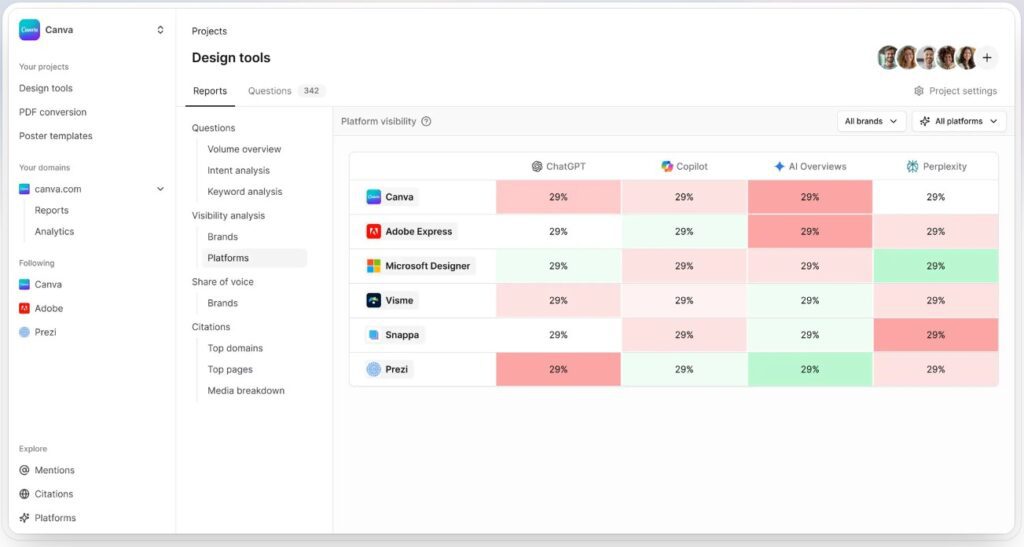
Hall AI provides in-depth tracking of your brand’s presence in AI-generated responses. It analyzes everyday user interactions across platforms such as ChatGPT, Perplexity, Gemini, Copilot, Claude, and search engine AI overviews.
You receive precise data on mention counts, sentiment breakdowns into positive, neutral, or negative categories, share-of-voice percentages compared to competitors, and trend lines over time.
This information comes from large volumes of daily queries. Marketers can use this granularity to identify weak areas, such as overlooked topics or negative perceptions.
They can then test content adjustments to improve rankings in AI outputs.
The feature includes full conversation snippets for context. This allows you to develop prompts that align AI responses with your preferred brand narrative in generative search environments.
Website Citation Insights
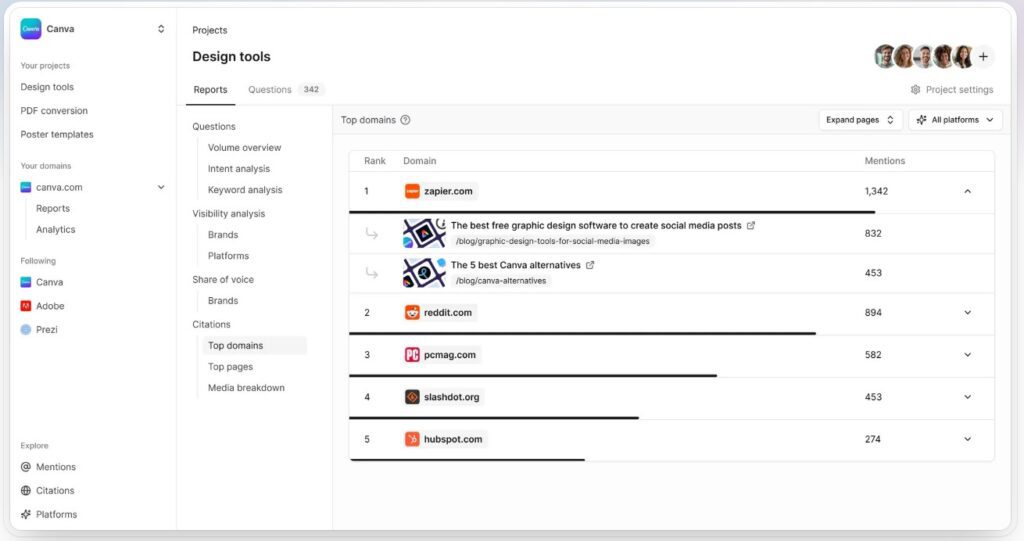
Hall AI maps every instance where your website pages appear in AI replies. It shows the original user query that triggered the response, an excerpt of your content, and the surrounding text in the AI answer.
You can spot patterns, for example, in which URLs receive the most citations or are misrepresented. Teams use this data to prioritize updates, such as adding structured data or more detailed FAQs.
The tool reveals citation velocity, which measures how frequently pages get referenced, along with quality scores. This helps ensure your domain remains a preferred source for AI engines as their sourcing methods continue to evolve.
Agent Analytics
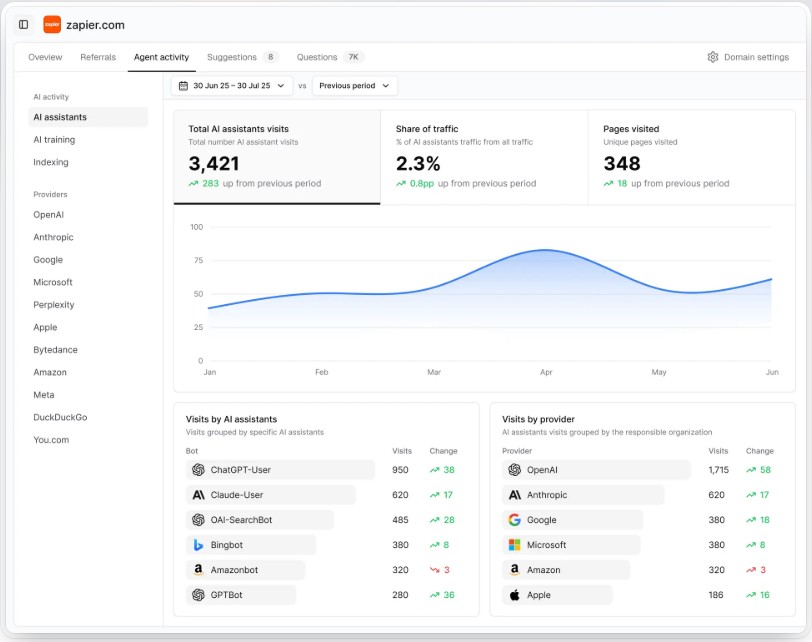
Hall AI records activity from AI crawlers on your domain, including bots like GPTBot, OAI-SearchBot, and ClaudeBot. It provides details on hit frequency, specific pages accessed, user agents involved, and geographic locations.
The free tier offers 60 days of historical data, and paid plans provide longer retention. This data correlates directly with AI conversation performance downstream.
For instance, you might notice a crawler activity spike just before a drop in visibility. Such insights guide actions like firewall adjustments, robots.txt modifications, or content access restrictions.
The feature links site accessibility to real conversation success, creating a vital connection between technical backend operations and marketing outcomes in GEO strategies.
Conversational Commerce
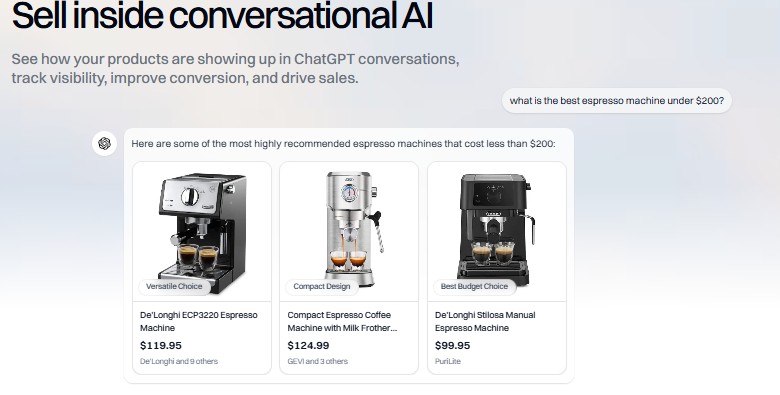
This feature targets online retailers by examining AI-driven shopping interactions. It covers scenarios like product recommendations in ChatGPT or Perplexity queries.
You can track which consumer questions lead to mentions of your products, along with associated retailer links and sentiment feedback on pricing or reviews.
This measures potential for conversions. E-commerce teams identify gaps in queries, such as “best running shoes under $100,” and optimize product pages accordingly.
As a result, your placements in AI responses improve over time. In today’s landscape, where AI conversations influence impulse purchases, the tool transforms monitoring into an effective sales strategy.
Competitive Benchmarking
Hall AI enables side-by-side comparisons with competitors. You analyze metrics like AI mention shares, differences in sentiment scores, and dominance in citations over customizable time periods.
The tool lets you drill down into details, such as why a rival outperforms in queries like “sustainable fashion options.” You can then study and adapt their approaches.
Unlike basic competitor spying, this provides dynamic updates with fresh data. It supports bold positioning moves in competitive market segments.
Hall AI Review Plan and Pricing
| Plan | Price (USD / month) | Projects | Questions/month | Answers/month (max) | Update frequency | Contributors | History length | Notable extras |
|---|---|---|---|---|---|---|---|---|
| Lite | Free | 1 | 25 | 300 | Weekly | 1 | 3 months | Mention, citation, ranking, sentiment, CSV export, 60 days of agent analytics |
| Starter | $199 | 20 | 500 | 45,000 | Daily | 2 | 6 months | Unlimited viewers, unlimited agent analytics retention |
| Business | $599 | 50 | 1,000 | 120,000 | Daily | 5 | 12 months | Looker export, SSO/SAML, SCIM/JIT, 3‑month audit logs, priority support |
| Enterprise | From $1,499 | Custom | Custom | Custom | Custom | Custom | Unlimited | API access, advanced security, extended audit logs, custom contract terms |
Lite plan (free)
The Lite plan is a permanent free tier designed for basic monitoring and testing. It supports one project and lets you track up to 25 questions, with a total of 300 AI answers analyzed each month.
Data is refreshed weekly, which is enough to see broad trends but not day‑to‑day changes. You can add one contributor to manage the project and invite unlimited viewers to see the reports.
Lite also includes core features such as mention tracking, citation tracking, ranking analysis, sentiment analysis, CSV export, and 60 days of AI agent analytics, plus three months of historical data.
Starter plan ($199 per month)
The Starter plan is aimed at small teams that need daily data and more volume. It supports up to 20 projects and 500 tracked questions, with a quota of 45,000 answers analyzed per month.
Data updates move from weekly to daily, so you can react faster to changes in AI visibility. This tier includes two contributors, unlimited viewers, unlimited AI agent analytics retention, and six months of historical data.
All core analysis features and CSV export are included, but advanced options like Looker Studio export, SSO, and API access are not part of this plan.
Business plan ($599 per month)
The Business plan is built for larger teams or agencies managing many brands. It increases capacity to 50 projects and 1,000 questions, with up to 120,000 answers analyzed per month.
Data is still updated daily, and you can add up to five contributors while keeping unlimited viewers.
This tier includes unlimited AI agent analytics retention, 12 months of historical data, and unlocks more advanced options: Looker Studio export, custom SSO/SAML, SCIM and JIT provisioning, audit logs for three months, and priority support.
In this Hall AI Review, it is the first tier that is clearly optimized for complex team workflows and reporting.
Enterprise plan (from 1,499 USD per month)
The Enterprise plan is tailored for organizations that need custom scale, security, and integrations. Pricing starts at $1,499 per month and is configured based on usage, including custom limits on projects, questions, answers, contributors, and data update frequency.
It adds features that are not available on the other plans: API access, enterprise‑grade security controls, advanced access management with audit logs, unlimited historical data, and customized contract terms.
This tier is designed for companies that want Hall AI tightly integrated into their existing data stack and compliance requirements.
Hall AI Review Pros and Cons
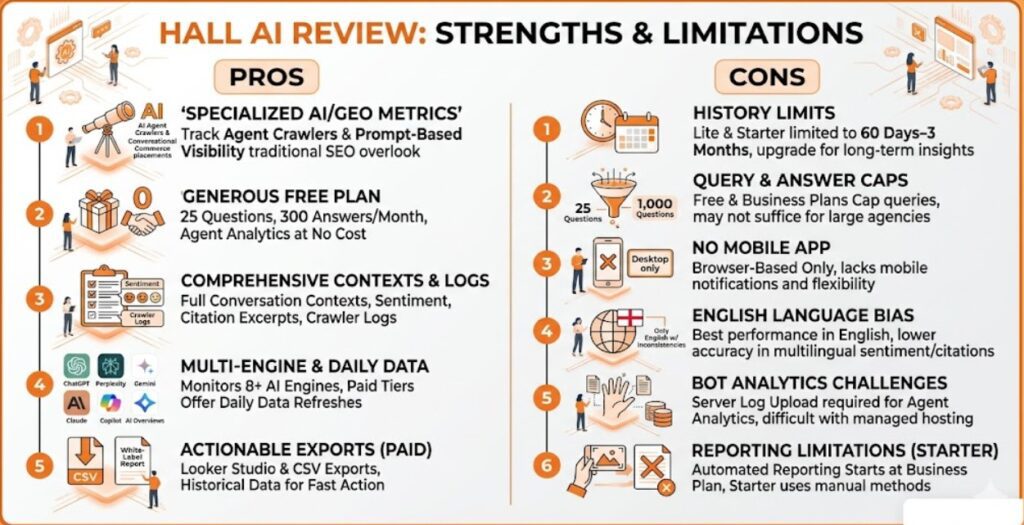
Here is a complete breakdown of the strengths and limitations of Hall AI Review.
Hall AI Pros
- Hall AI specializes in Generative Engine Optimization and AI Engine Optimization, tracking unique metrics like AI agent crawlers, conversational commerce placements, and prompt-based visibility that traditional SEO tools overlook.
- The entry-level plan includes 25 questions, 300 answers per month, weekly updates, and 60 days of agent analytics at zero cost. Solos and small teams can test core features like mention tracking and sentiment without commitment.
- Users access full conversation contexts, sentiment scores (positive/neutral/negative), citation excerpts with query triggers, and crawler logs (e.g., GPTBot hits).
- Hall AI monitors 8+ engines, including ChatGPT, Perplexity, Gemini, Claude, Copilot, and AI Overviews with daily data refreshes on paid tiers.
- Paid plans offer daily refreshes, CSV/Looker Studio exports (Business+), and historical data (3- unlimited months), helping teams act fast on trends.
Hall AI Cons
- The free Lite plan limits history to 60 days, while the Starter plan extends only to three months. Established brands needing year-over-year comparisons must upgrade to higher tiers for sufficient long-term insights.
- The Lite plan’s cap of 25 questions per month prevents comprehensive monitoring. Even the Business plan restricts users to 1,000 questions and 120,000 answers monthly, which may not suffice for large agencies handling extensive campaigns.
- The platform relies on web browsers for access, lacking a mobile app for real-time notifications or on-the-go reviews. This disadvantages marketers who need flexibility outside desktop environments.
- Hall AI performs best with English-based AI engines, leading to lower accuracy in sentiment detection and citation analysis for non-English markets. Global teams running multilingual campaigns face inconsistencies.
- Agent analytics depends on users uploading server logs to track bots like GPTBot. Teams on managed hosting, CDNs, or without log access encounter setup challenges and gaps in visibility data.
- Basic CSV exports and Looker Studio integration start only at the Business plan. Starter users must rely on screenshots or manual data pulls for client reporting, which reduces efficiency.
Top Alternatives to Hall AI
When you compare Hall AI with other tools, Radarkit is one of the strongest options you should look at first.
Radarkit is a dedicated AI search tracking and content optimization platform that focuses on how LLMs actually talk about your brand inside real conversations.
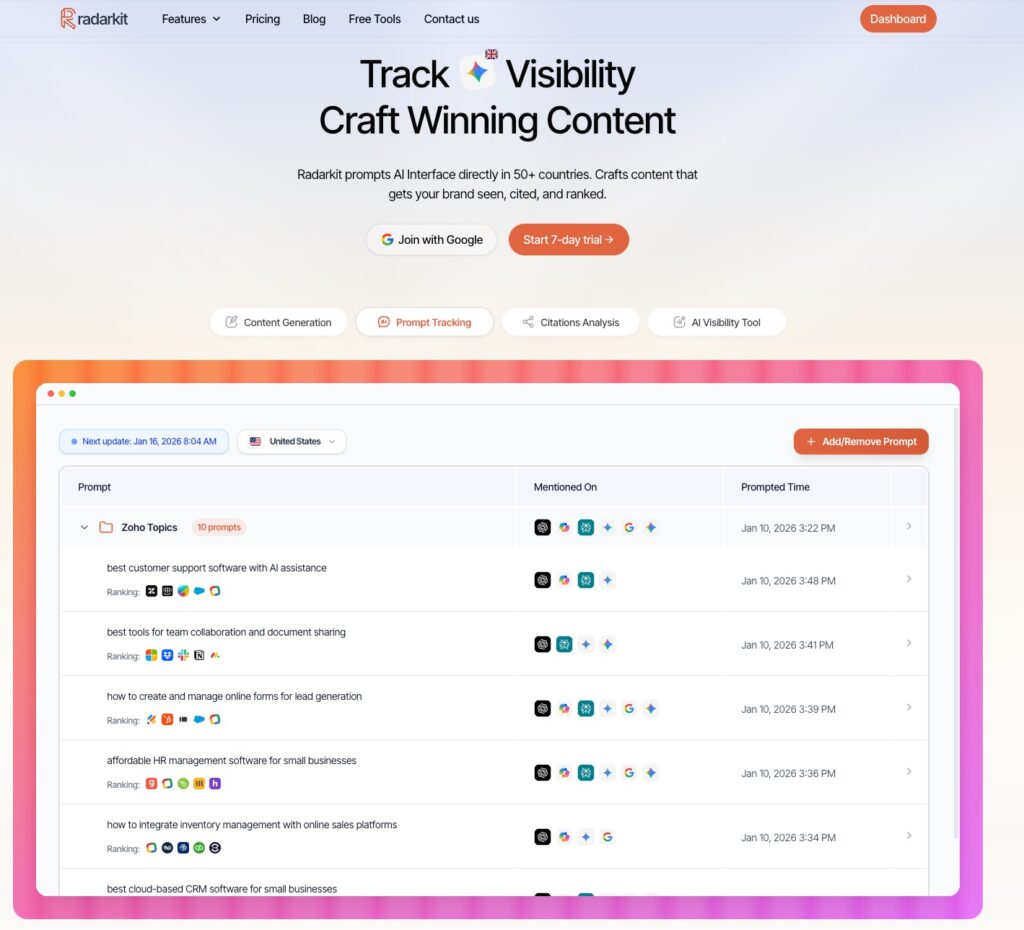
It runs checks directly in interfaces like ChatGPT, Perplexity, Gemini, and Copilot, often through real-browser or proxy setups, so the results mirror what end users see in different locations rather than only API output.
It helps you monitor brand and competitor mentions, share of voice, and the specific URLs that get cited in AI answers, then connects that visibility to organic performance using integrations such as GA4.
Radarkit can run queries from many countries using residential IPs, which is useful if you care about local or regional AI visibility instead of a single global view. For competitive work, it highlights which domains and pages LLMs lean on most for your priority topics, turning those insights into clear content and link-building targets.
Entry pricing is relatively low, with starter plans around 29 USD per month and a 7-day free trial, so smaller teams and agencies can experiment without a high upfront cost.
Other tools worth exploring
- LLM Pulse: Focused on monitoring AI visibility and sentiment with affordable plans and detailed query-level reporting.
- Peec AI: Designed for brands that need cross-engine reporting and stronger support for multiple languages and regions.
- Profound: Combines AI search tracking with stricter compliance and security options suitable for regulated industries.
- Scrunch AI: Oriented toward narrative and reputation monitoring, showing how AI systems describe your brand story over time.
Why are there not many Hall AI User Reviews
There are still relatively few public Hall AI user reviews, mainly because the product and its category are both quite young.
Hall was founded in 2023 and focuses on AI visibility and Generative Engine Optimization, which is a newer niche compared with traditional SEO, so the overall user base is smaller and has had less time to post feedback.
On platforms like G2, there are only around a dozen verified Hall AI Review, and while the average rating is very high, the sample size is still limited compared with older tools that have hundreds or thousands of reviews.
Another factor is that many early adopters are agencies and in‑house specialists who treat AI search data and workflows as part of their competitive edge, so they are less inclined to share detailed public write‑ups of the tools they rely on.
In a fast‑moving area like GEO, teams often prefer to keep their stack and tactics quiet, which naturally reduces the volume of visible testimonials and case studies.
The small number of Hall AI review, therefore, says more about the maturity of the market and the profile of its users than it does about any underlying issue with the product itself.
FAQs on Hall AI Review
How long does it take to see useful data in Hall AI?
Most users start seeing meaningful patterns within a few days of adding their first questions, especially on paid plans where data refreshes daily. However, trend analysis (for example, shifts in sentiment or share of voice) is more reliable after several weeks of consistent tracking.
Do you need developer access or engineering support to use Hall AI?
You can get value from Hall AI without any code by configuring projects, adding questions, and reading the dashboards in the browser. Technical involvement becomes more helpful if you want to upload detailed server logs for agent analytics or integrate exports into internal reporting systems.
How “set and forget” is Hall AI in day‑to‑day use?
Once you set up projects and questions, Hall AI can run largely in the background, pulling fresh AI answers and updating metrics on a schedule. The teams that get the most from it usually check reports weekly, then fold those findings into ongoing content, PR, or product page updates rather than treating it as a one‑time audit.
Can Hall AI replace traditional SEO tools?
Hall AI complements but does not fully replace classic SEO platforms, because it focuses on AI answers, citations, and AI crawlers instead of traditional SERP rankings, backlinks, and technical audits. Most reviews suggest using it alongside an existing SEO stack if AI visibility is becoming a meaningful traffic or brand channel.
What should I check during a trial to decide if Hall AI is worth it?
During your first month, it helps to track a mix of branded, competitor, and high‑value non‑branded queries, then compare those insights with your analytics and sales data. If the AI visibility trends you see lead to concrete actions, such as new content, better FAQs, or improved product pages, and those changes correlate with uplift, that is a strong signal that Hall AI is a good long‑term fit.
Final Thoughts on Hall AI Review
Hall AI is an AI visibility platform that helps you see how large language models mention your brand, cite your content, and visit your site, which makes it useful if you care about how AI affects search and discovery.
Its strongest features are generative answer insights, website citation insights, and agent analytics, which together show what AI says about you, which pages it uses, and how AI crawlers behave on your domain.
Pricing can feel high for smaller teams because the free Lite plan is limited and the first paid tier jumps to a few hundred dollars per month, but the Business and Enterprise plans do unlock meaningful extras like longer history, advanced exports, and API and security options for agencies and larger organizations.
If you are evaluating Hall AI, the key question is whether you will actually use those deeper insights often enough to justify the cost; for teams that act on AI visibility data regularly, it becomes a proactive way to manage brand presence in AI search, while others may find a lighter or cheaper tool more suitable.