
While SE Ranking is a solid choice, exploring SE Ranking AI Visibility Tracker alternatives can provide additional features, better integration, or a more tailored approach to your specific needs.
So, without any further ado, let’s get started.
Quick Pick Criteria
- Radarkit.ai – Multi-assistant AI visibility at scale.
- Peec AI – Prompt-level AI visibility for marketers.
- Athenahq – GEO plus broader SEO context.
- Rankscale AI – GEO with deep competitive insights.
- LLMrefs – Laser-focused AI citation tracking.
- Surfer AI Tracker – AI visibility tied to content optimization.
- Scrunch AI – AI visibility plus brand monitoring and sentiment.
- Writesonic – GEO + AI content + SEO in one.
- Nightwatch.io – Precise rank tracking with AI add-ons.
- Otterly.ai – Simple, report-first AI search monitoring.
Quick Comparison Table SE Ranking AI Visibility Tracker Alternatives
| Tool | Starting price* | Engines/coverage | Consider if |
|---|---|---|---|
| RadarKit.ai | From ~$29/mo | ChatGPT, Gemini, Perplexity, Copilot, Google AI Overviews | You want straightforward, multi-engine AI visibility with real UI checks and are okay with a focused GEO tool rather than a full SEO suite. |
| Peec AI | From ~$89/mo | ChatGPT, Perplexity, Google AI Overviews (+ some extra models) | You care about tracking specific prompts/topics, comparing your brand vs competitors in AI answers, and you’re fine paying a bit more for cleaner UX. |
| Athenahq | From $295/mo | Up to 8+ LLMs (ChatGPT, Claude, Gemini, Perplexity, Copilot, AIO, AI Mode, Grok, etc.) | You’re an enterprise or advanced team needing wide engine coverage, credit-based usage, and deeper analytics that tie AI visibility into broader SEO decisions. |
| Rankscale AI | $99/mo | Major AI engines like ChatGPT, Claude, Perplexity, and Google AI Overviews | You want detailed AI-answer breakdowns, competitive GEO metrics, and a more technical view of where and why AI surfaces your competitors over you. |
| LLMrefs | From ~$79/mo | ChatGPT, Perplexity, Gemini / AI Mode + other AI search engines <span class=”inline-flex” data-state=”closed”> | You mainly care about AI citations and authority signals—who gets linked, how often, and in what context—so you can tune content and outreach around those gaps. |
| Surfer AI Tracker | $79/mo (Essential) | Google AI Overviews/AI Mode, ChatGPT, Perplexity | You already work heavily in Surfer or want a content-first setup where AI visibility data flows straight into on-page fixes and new article briefs. |
| Scrunch AI | $100/mo | ChatGPT, Claude, Gemini, Perplexity, Google AI Overviews/Mode, Meta AI | You’re a brand/PR or B2B team that needs AI visibility plus brand monitoring, sentiment, and executive-ready reporting rather than only pure GEO metrics. |
| Writesonic | GEO on Pro+ from ~$99/mo; core from $39/mo | ChatGPT, Google AI Overview, Claude and others via GEO stack | You want one platform to ideate, write, optimize, and track AI visibility, even if it’s less specialized than some single-purpose GEO tools. |
| Nightwatch.io | SEO from ~$32–39/mo; AI add-on ~$99/mo | Google/Bing/YouTube, etc. + AI: ChatGPT, Gemini, others via LLM add-on | You need reliable classic rank tracking (incl. local) and want to bolt on AI Overview/LLM tracking without rebuilding your entire SEO stack. |
| Otterly.ai | $29/month (Lite) | ChatGPT, Perplexity, Google AI Overviews, Gemini, AI Mode | You prefer simple, report-led AI search monitoring—share of voice, mentions, and competitor comparison—over complex workflows or heavy in-app editing. |
10 Best SE Ranking AI Visibility Tracker Alternatives
Here are the 10 best SE Ranking alternatives.
Radarkit.ai
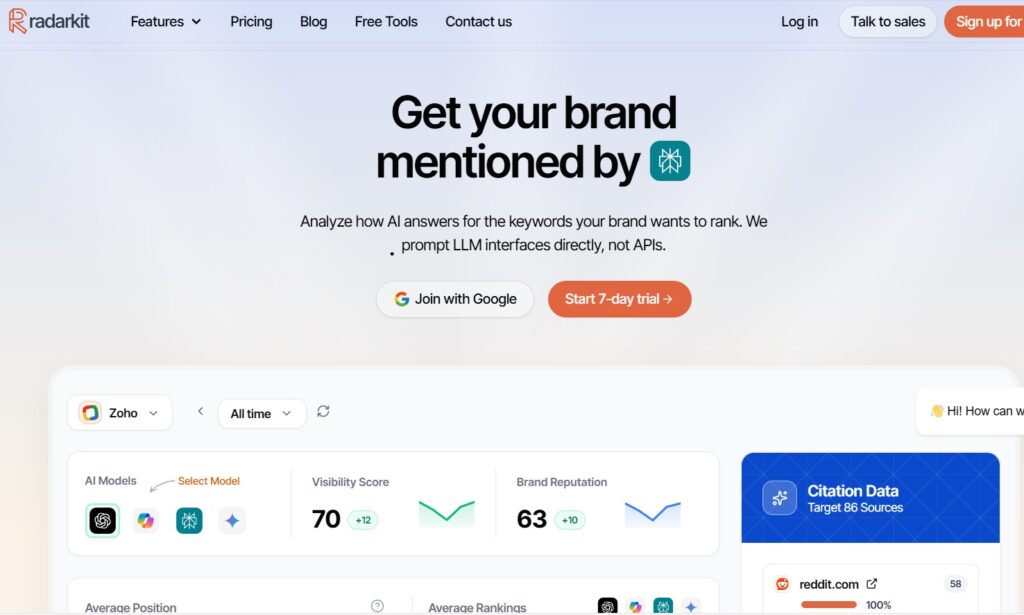
I recently tried Radarkit.ai, and it’s one of the best SE Ranking AI Visibility Tracker alternatives if you’re focused on tracking your brand across AI platforms.
RadarKit monitors your visibility on major AI assistants, such as Google AI Overview/AI Mode.
The platform tracks competitors’ share of voice on AI assistants, giving you insight into how they’re being mentioned.
I found the ‘Most Cited Sources’ feature particularly useful as it helped me focus backlink outreach on high-authority sites that AI platforms frequently reference.
Radarkit also connects to Google Analytics to show which AI platforms drive qualified traffic to your site.
Why is it better
While SE Ranking offers solid features, Radarkit provides a more granular, AI-focused approach for anyone serious about staying visible in the AI-driven search landscape.
Pricing starts at $29/month for the Lite plan, and there’s a 7-day free trial available to test if it fits your needs.
What impressed me was how it tracks keywords and shows how your brand performs across these AI surfaces using real browser sessions—not sanitized API data.
So you see what actual users see.
Peec AI
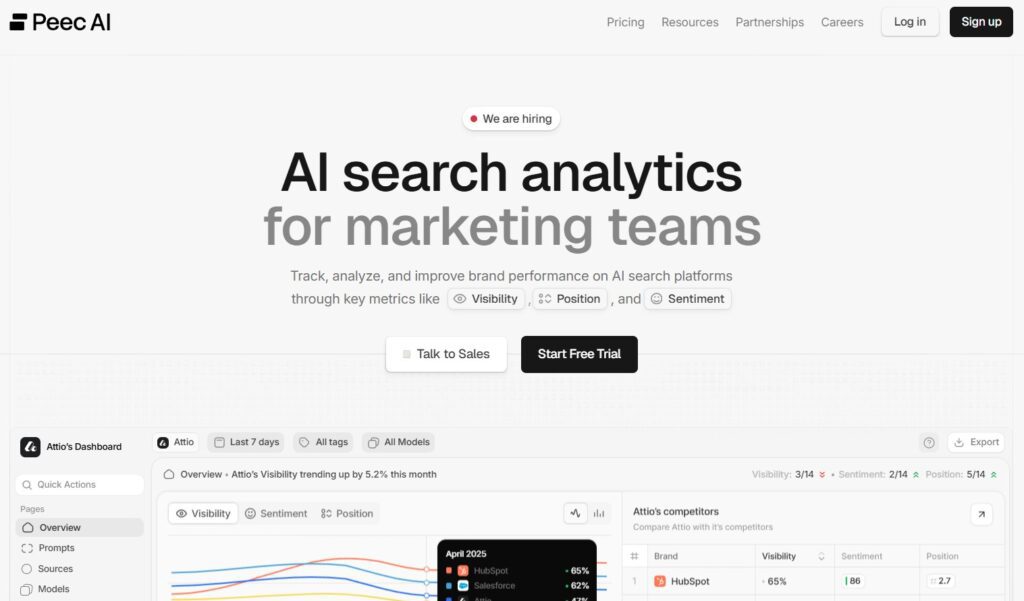
What impressed me most about this SE Ranking AI Visibility Tracker alternatives was its prompt‑level analysis, showing how AI models respond to specific queries around my brand and keywords.
This granular view makes it much easier to understand how AI interprets and presents my content and where there are gaps worth targeting.
Why is it better
Compared to SE Ranking’s AI visibility tracker, Peec AI feels more AI‑native and workflow‑driven, focusing on practical steps you can take based on real AI answers rather than broad SEO metrics.
The dashboard is intuitive and keeps the focus on visibility inside AI search, making it a strong alternative if your main goal is to improve how often and how well your brand appears in AI results.
AthenaHQ
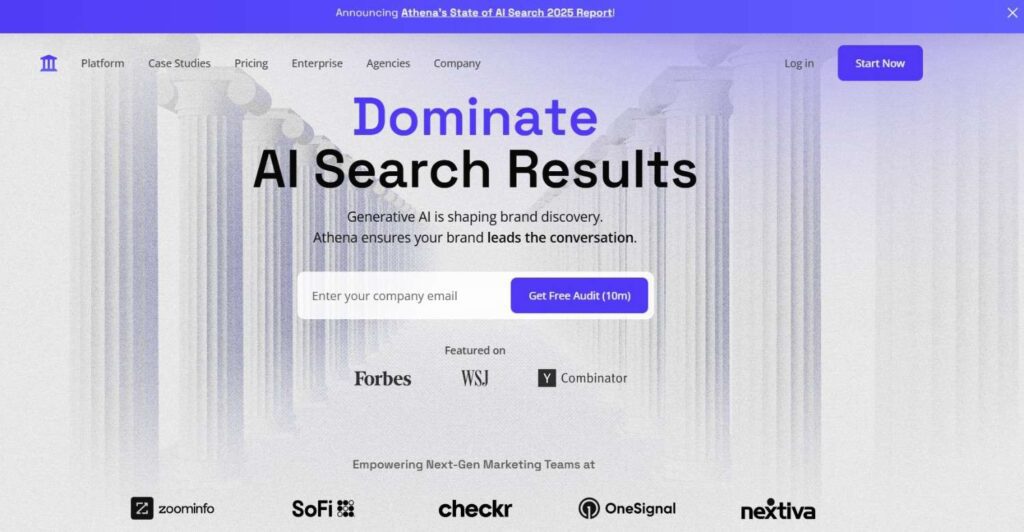
In my search for strong SE Ranking AI Visibility Tracker alternatives, I tested Athenahq, a GEO (Generative Engine Optimization) platform built to monitor and improve brand visibility across AI-driven search and AI answers.
What stood out first was its rich analytics around how AI engines surface, cite, and interpret my content, including metrics like share of voice, citation frequency, and brand mentions for specific topics and keywords.
Why is it better
Athenahq takes a more holistic angle than many SE Ranking AI Visibility Tracker alternatives by blending AI visibility data with more traditional SEO and performance insights in a single interface.
Features like competitive benchmarking, content gap identification, and clear, actionable recommendations make it easier to see where competitors are winning and what to fix next.
The dashboard is clean and approachable, which makes all that depth feel manageable rather than overwhelming, and positions Athenahq as a compelling, more integrated alternative for teams that want advanced AI visibility plus broader SEO context in one place.
Rankscale AI
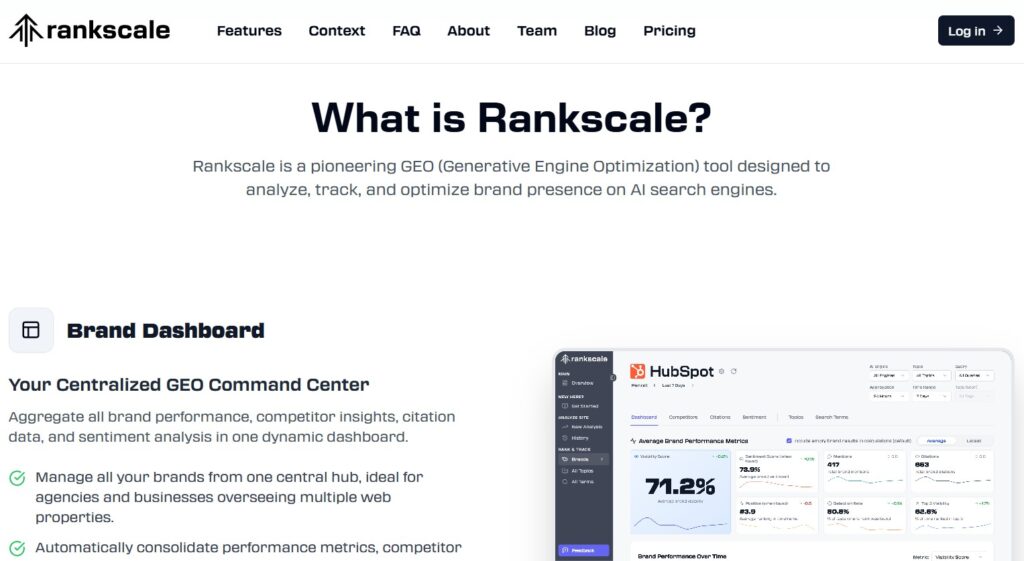
Rankscale AI is built specifically for tracking and improving how your brand shows up inside AI-generated answers, and it leans heavily into competitive intelligence.
What stood out to me is how it breaks down AI answers to show where competitors are winning, which sites get cited instead of you, and where your content structure or relevance is holding you back.
Its AI-powered website audits and citation analysis make it much easier to spot concrete opportunities to improve how AI models evaluate and present your pages.
Why is it better
Compared to SE Ranking, Rankscale AI feels more focused on GEO (Generative Engine Optimization) and niche opportunities inside AI search.
Including which prompts and queries trigger specific AI answers across engines like ChatGPT, Claude, Perplexity, and Google AI Overviews.
The brand dashboards, performance KPIs like Visibility Score and Average Position, and team workspaces give SEO and content teams a shared place to explore insights and plan next moves.
If your goal is to sharpen your strategy around AI-driven search results rather than manage every traditional SEO task in one tool.
Rankscale AI is a compelling, competitively priced “SE Ranking AI Visibility Tracker Alternatives”, with entry plans starting around $20 per month.
LLMrefs
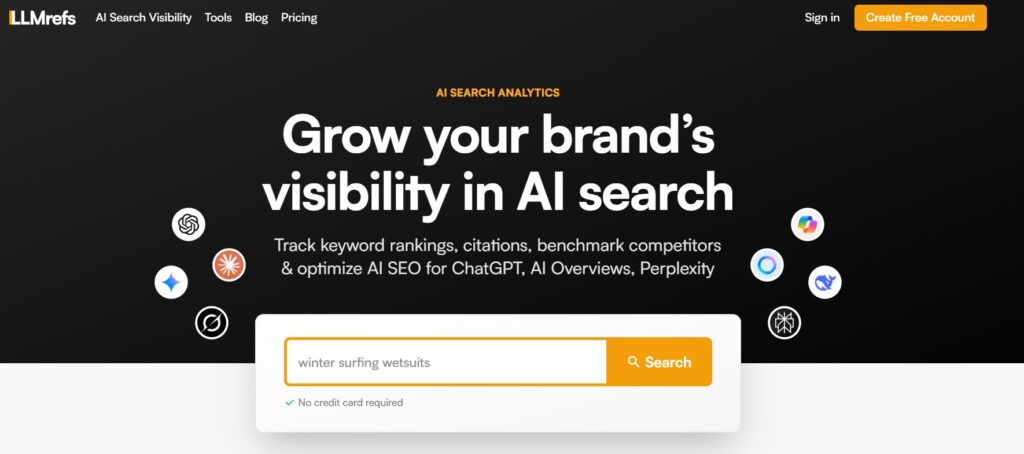
LLMrefs is an AI search visibility platform built specifically around citations—it tracks how often brands, pages, and domains are referenced inside answers from AI models.
Instead of giving a generic keyword-ranking view, it shows where and how your brand is mentioned in AI outputs, which sources are cited instead of you, and how that changes over time.
Why is it better
Compared to SE Ranking and some of SE Ranking AI Visibility Tracker alternatives, LLMrefs takes a narrower but deeper, citation-first approach that is ideal if your main goal is to build authority inside AI results.
Its context-rich citation tracking and proprietary LLMrefs Score help you see which topics and pages are earning AI trust, then shape content and link-building so your work is more likely to be cited in future AI answers.
Surfer AI Tracker
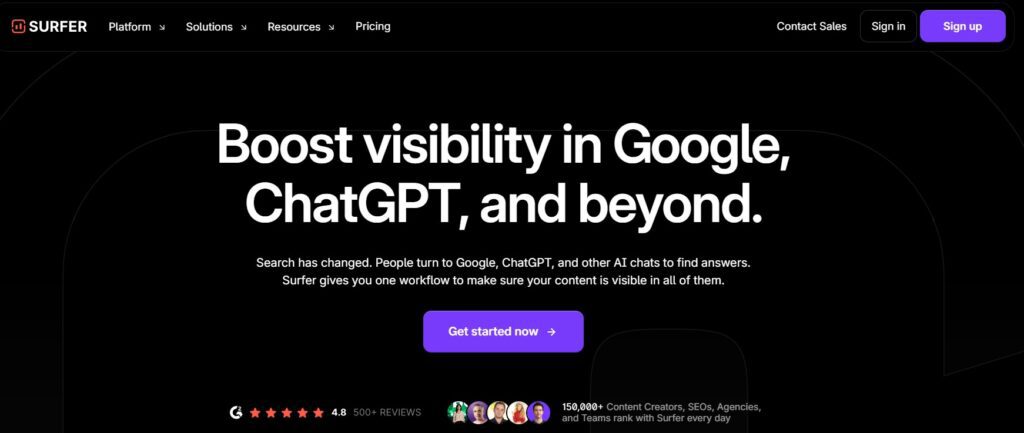
Surfer’s AI Tracker is not a traditional all-in-one AI visibility platform like SE Ranking’s AI Visibility Tracker, but it does give you a focused way to monitor and improve how AI tools reference your content.
It helps you see how often your brand is mentioned in AI answers across Google AI Overviews, Google AI Mode, ChatGPT, and Perplexity, then tie those insights back to content updates and on-page optimization.
Why is it better
Where Surfer really shines is in combining this AI visibility data with its existing content audit and optimization features, so you can quickly adjust structure, entities, and context to better match what Google and AI chats are “looking for.”
If your main goal is to upgrade content quality, relevance, and organic traffic while also keeping an eye on how AI surfaces your pages, Surfer’s AI Tracker and content tools work well as a complement to dedicated AI visibility platforms and can serve as “SE Ranking AI Visibility Tracker alternatives” if you prefer a content-first workflow.
Scrunch AI
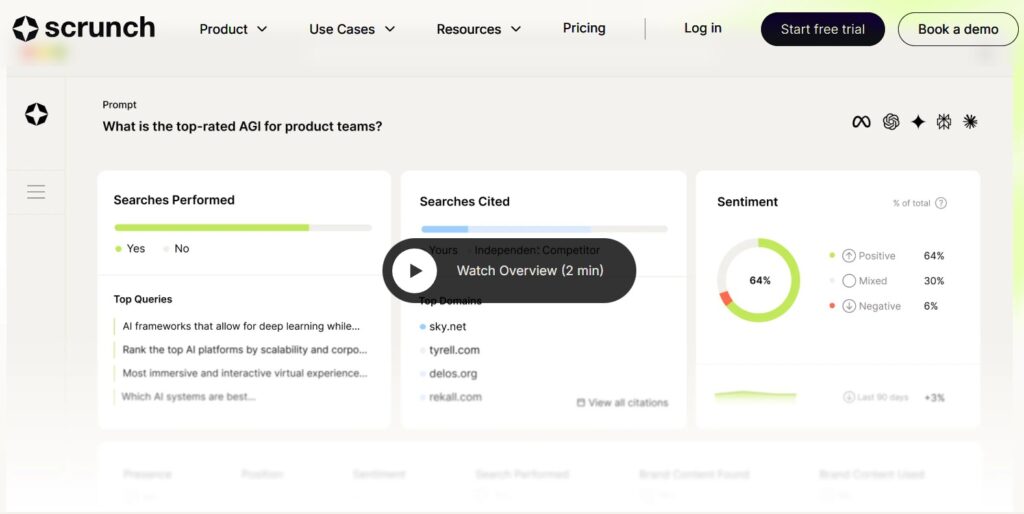
Scrunch AI is an AI search and brand visibility platform that tracks how your brand appears across major AI engines and helps you optimize for those touchpoints.
It monitors brand presence, citations, and sentiment in AI-generated answers, then turns that into insights you can use to refine messaging and content so AI systems describe you more accurately and favorably.
Why is it better
Beyond simple visibility scores, Scrunch analyzes prompts, conversations, and topics to reveal where competitors are winning and which themes matter most in your niche, so you can align content with real AI search behavior.
While SE Ranking gives broader, traditional SEO coverage, Scrunch AI is one of the strongest “SE Ranking AI Visibility Tracker alternatives” if you want deeper visibility analytics around AI search, specifically for teams that care about sentiment, citations, and AI-driven referral traffic alongside classic SEO metrics.
Writesonic AI Visibility Tracker

While testing Writesonic, the standout for me was its AI visibility tracking inside the GEO (LLM SEO) stack, not just its content writer.
What ties it together is the ability to go from tracking to action in the same workspace. You can identify citation gaps, refresh underperforming pages, fix technical issues, and create new content specifically designed to be cited by AI models.
Why is it better
Compared to SE Ranking and other SE Ranking AI Visibility Tracker alternatives, Writesonic feels more like a full-stack GEO platform.
By combining AI visibility tracking, citation insights, and AI content creation, making it a strong “SE Ranking AI Visibility Tracker alternatives” if you want both deep AI search analytics and built-in tools to execute on those insights.
Nightwatch.io
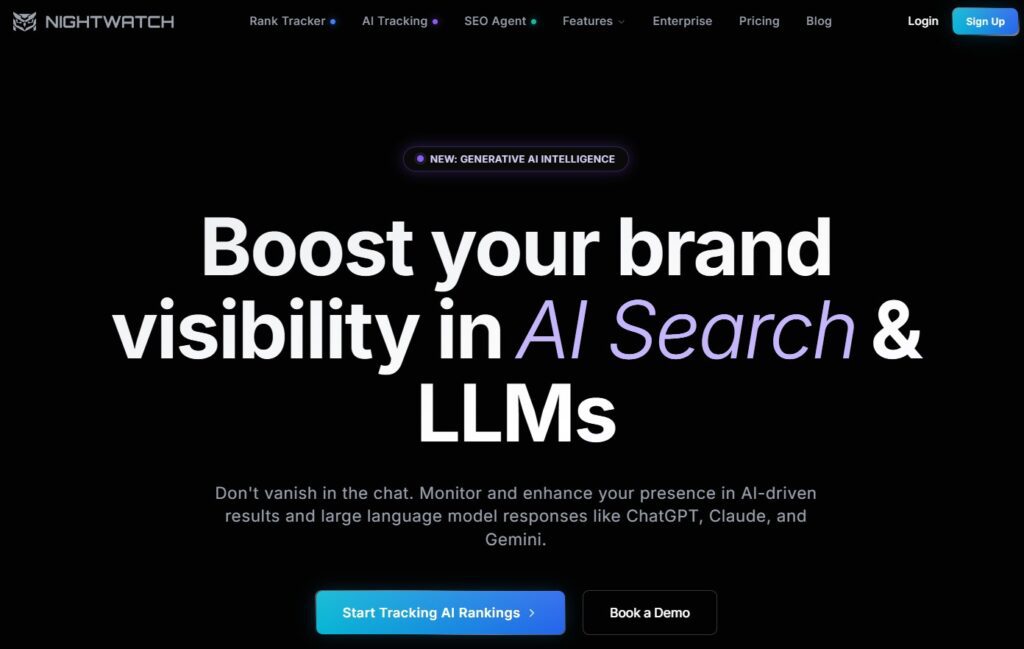
During my search for effective SE Ranking AI Visibility Tracker alternatives, I revisited Nightwatch.io, a precise rank tracker and SEO monitoring platform.
It tracks keyword rankings across major search engines and locations, with visual reports that make it easy to spot trends, compare against competitors, and see how your visibility is changing over time.
With its newer AI Overview and LLM tracking features, Nightwatch is starting to bridge classic SEO with AI search, making it a useful way to monitor the impact of your AI-focused SEO efforts in one place.
Why is it better
Nightwatch.io can be a better fit than SE Ranking AI Visibility Tracker alternatives if you care most about precise rank tracking, strong local/geo coverage, and clear visual trend reporting in one place.
With AI Overview and LLM tracking layered onto its core rank tracker, it lets you monitor both classic SEO and emerging AI search surfaces without switching tools, which can feel more focused than SE Ranking’s broader, suite-style approach.
Otterly.AI
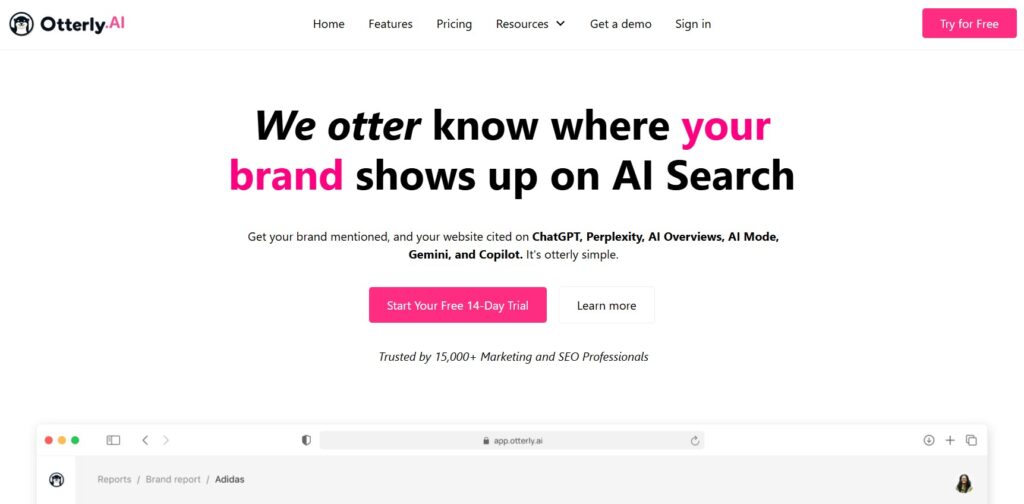
I tested Otterly.AI as part of my AI SEO stack, and it’s very much a dedicated AI search monitoring tool. Otterly automatically runs curated prompts across AI search engines like ChatGPT, Perplexity, Google AI Overviews, Gemini, and AI Mode, then shows when my brand is mentioned, how often it’s cited, and which competitors are winning those same answers.
What I like most is the Share of Voice and citation insight.
You can see which queries you dominate, where you’re losing ground, and which domains AI keeps linking to instead of you, so it becomes much easier to plan content updates and link outreach around real AI behavior.
Why is it better
Otterly.AI can be a better fit under SE Ranking AI Visibility Tracker Alternatives if you care less about generic “where do I rank” views and more about how AI engines actually talk about your brand.
How to Choose the Best SE Ranking AI Visibility Tracker Alternatives
-
Consider RadarKit if you want to see how often your brand appears across major AI assistants and what share of voice you have versus competitors.
-
Check the engine coverage you actually need instead of paying for every possible AI assistant.
-
Evaluate reporting & exports such as Client-ready PDFs/links so you can share insights easily with clients and stakeholders.
-
Match any tool to your budget and your team’s technical comfort.
-
Use free trials to test what fits your workflow best.
FAQs SE Ranking AI Visibility Tracker Alternatives
What is the best overall alternative to SE Ranking’s AI Visibility Tracker?
For most teams, RadarKit.ai is the strongest overall alternative, thanks to its multi-engine coverage (ChatGPT, Gemini, Perplexity, Copilot, AI Overviews), real‑browser checks, and clear visibility and share‑of‑voice reporting.
Which tool is best if I care about “real user view” accuracy?
RadarKit.ai again stands out because it prompts LLMs in real browsers instead of via APIs, so the data stays close to what users actually see in AI answers.
Are there cheaper SE Ranking AI Visibility Tracker Alternatives?
Yes, there are cheaper alternatives to SE Ranking’s AI Visibility Tracker, and Radarkit.ai is one of the strongest options on price-to-value.
Radarkit’s Lite plan starts at $29/month with multi-assistant tracking, prompts, and citation insights, which is significantly lower than many suite-based AI visibility add-ons.
Do I really need multi-engine coverage for AI visibility?
If your audience uses multiple assistants (e.g., ChatGPT plus Perplexity and Gemini), multi-engine tracking is crucial; if you’re Google-first, strong AI Overview coverage may be enough
How should I decide which SE Ranking alternative to pick?
Match tools to goals (citations vs prompts vs rank-style metrics), required engines, reporting/export needs, budget, and team skills. Then use free trials to see which workflow feels usable day-to-day.
Conclusion
Choosing the right AI visibility platform is key in an AI‑first search world, and RadarKit.ai stands out as the most balanced “SE Ranking AI Visibility Tracker Alternatives.”
It’s real‑browser, multi‑location checks across major AI assistants, fast data refresh, and clear share‑of‑voice and citation insights give you a truer picture of what users actually see than traditional rank tracking alone.
If the goal is practical, reality‑checked AI visibility at a startup‑friendly price, RadarKit is the option that best combines accuracy, coverage, and usability