After testing a range of tools that handle local rankings, maps visibility, demographics, reporting, and AI search visibility, I’ve narrowed it down to 6 SplashDash alternatives worth your attention.
If you run a local SEO agency, you already know how hard it is to turn messy data into clean, client‑ready reports that actually help you close deals and retain accounts.
SplashDash does a great job here, but it’s not the only option, and depending on your workflow, budget, and tech stack, it might not even be the best fit.
So, without any further ado, let’s get started.
Quick Pick Criteria SplashDash Alternatives
- Radarkit: Best for AI search visibility and GEO focused content for LLMs.
- AgencyAnalytics: Best for automated multi channel reporting and client dashboards.
- Local Dominator: Best for deep local audits and neighborhood level geo grid tracking.
- GMB Radar: Best for precise Google Maps and local pack geo grid reporting.
- BrightLocal: Best for all in one local SEO, citations, reviews, and rank tracking.
- Whatagraph: Best for branded, visual reporting on top of your existing marketing stack.
What is SplashDash & Why Look for Alternatives?
SplashDash is an all‑in‑one local SEO reporting dashboard built for agencies that need fast, visual reports for sales calls, audits, and ongoing client communication.
It pulls in data on rankings, demographics, reviews, ads, keywords, backlinks, and digital presence, then turns that into prebuilt, client‑ready reports like Competitive Overview, Digital Presence, LSA Ranking, Local Backlinks Benchmark, and Local Demographics.
These reports are generated as snapshots you can share via link or present on calls, making it easy to show prospects and clients exactly where they stand in local search without building custom dashboards from scratch.
As your agency grows, you might start looking for SplashDash alternatives when you need deeper campaign management, more customizable ongoing dashboards, AI search visibility features, or tighter integration with the rest of your reporting stack.
Quick Comparison Table of SplashDash Alternatives
| Tool | Best for | Main focus for agencies | White-label reporting | Local rank tracking | AI / LLM visibility focus | Starting price (approx.) |
|---|---|---|---|---|---|---|
| Radarkit | Agencies obsessed with AI search and generative SEO visibility | AI search visibility tracking and GEO content optimization across ChatGPT, Gemini, Perplexity, etc. | In-app reports & exports | Yes (location-based tracking) | Yes (LLM visibility & AI SEO) | From $29/mo |
| AgencyAnalytics | Agencies needing one reporting hub for SEO, PPC, social, and local | All‑round reporting platform with deep local SEO dashboards & GBP integration | Yes (fully white-label) | Yes (local + organic) | No (classic SEO analytics) | From $59/mo. |
| Local Dominator | Agencies selling “dominate your local market” style local SEO services | Local SEO audits, geo‑grid tracking, and automated white-label reports | Yes (white-label & branding) | Yes (geo‑grid + local pack) | No | From $32.50/mo |
| GMB Radar | Agencies wanting precise Google Maps and local pack visibility | Google Maps geo‑grid rank tracking and white-label local reports | Yes (white-label reports) | Yes (Maps + organic) | No | From about $15/mo |
| BrightLocal | Agencies wanting a mature, battle‑tested local SEO toolkit | Full local SEO toolkit: citations, reviews, audits, and local rank reports | Yes (white-label for agencies) | Yes (local rank checker) | No | From $39/mo |
| Whatagraph | Agencies centralizing cross‑channel and local SEO reporting | Flexible, cross‑channel reporting with local SEO templates and integrations | Yes (domains, logos, full branding) | Via connected SEO tools | No | From $229/mo |
6 Best SplashDash Alternatives I Tried For Local SEO
Here are the SplashDash Alternatives.
Radarkit
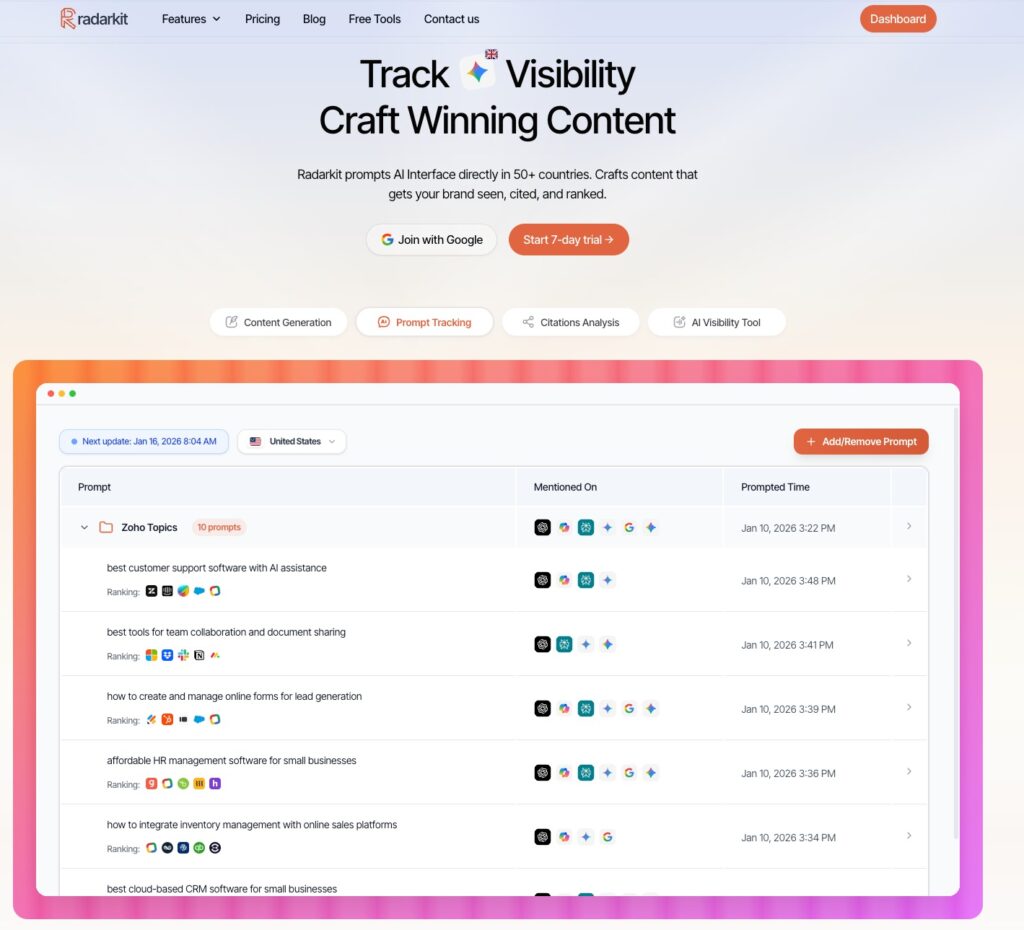
Radarkit is not a classic local SEO dashboard; it’s an AI search visibility and GEO content optimization platform built for the generative search era.
Instead of asking “Where do I rank in Google?”, Radarkit asks “How often does my brand or client show up inside ChatGPT, Gemini, Perplexity, and other LLM answers—and what content do I need to create to increase those mentions?”
Its tools help you track LLM citations, audit your site for AI readability, generate /llms.txt, and build GEO content tailored to AI search behavior, not just blue links.
For agencies already using SplashDash for local reports, Radarkit is a powerful complementary alternative that covers the AI visibility layer SplashDash doesn’t touch.
- Best for: Agencies that want to lead with AI SEO, LLM visibility tracking, and GEO content instead of just traditional local rankings.
- Why it’s a good alternative: Use Radarkit when clients care about being discovered inside AI answers, not only in Google’s local pack or traditional SERPs.
Radarkit’s Unbeatable Features
Radarkit.ai (part of the Alpha startup at Web Summit Qatar) is the best AI search tracker in the market right now.
What makes Radarkit different is its accuracy and the fact that it uses real browser tracking rather than APIs to deliver AI responses from 40+ countries.
- AI Share of Voice: Identify exactly which sites AI Chatbots trust most for your query vs. competitors
- Location-Based Tracking: Simulate real-time queries from 40+ countries using residential proxies to catch local citations and geo-specific data
- NLP & Fact-Based Content: Create content using the specific NLP terms and entities found in most cited sources to rank in AI search engines
- 1-Click GEO Content Writer: Generates optimized content that ranks in LLMs in 5 minutes without needing Google Search Console
- Query Fanouts Tracking: Tracks how AI models break one question into multiple angles and turn them into content sections
- AI Traffic Monitoring: See which AI platforms (ChatGPT, Perplexity, Gemini, Copilot) send actual visitors to your site
AgencyAnalytics
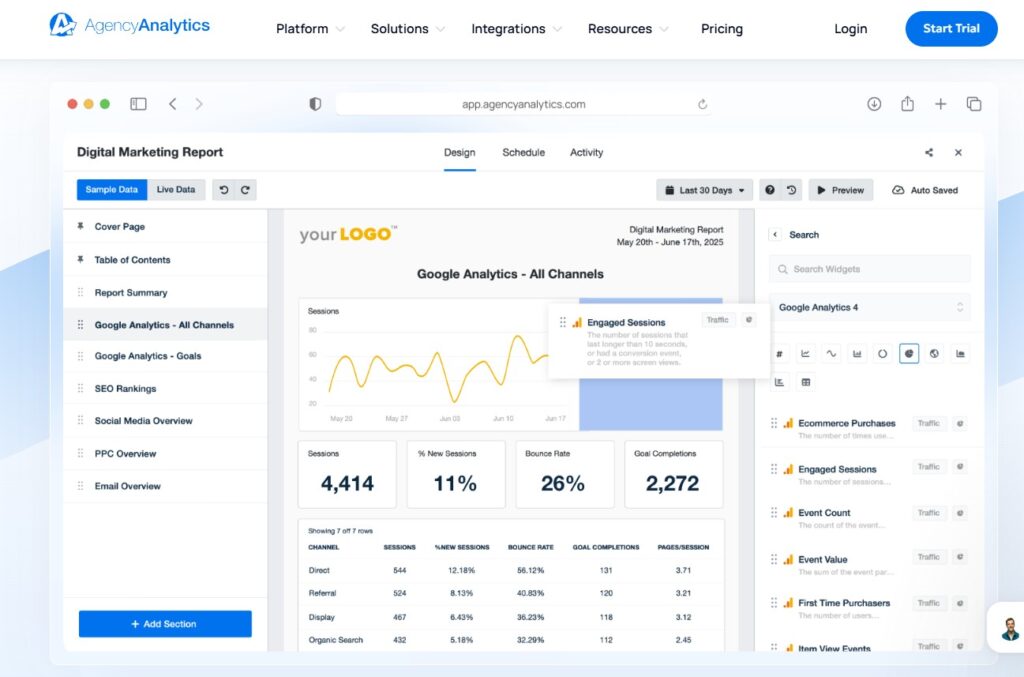
AgencyAnalytics is one of the best SplashDash alternatives, which offers full reporting and a dashboard platform that consolidates local SEO, organic SEO, PPC, social, and more into one place.
It offers prebuilt local SEO dashboard templates, deep Google Business Profile integration, and automated reporting that can go out to clients on a schedule.
Where SplashDash gives you highly curated, pre‑packaged reports, AgencyAnalytics gives you flexible dashboards and recurring reports that can be reused across dozens or hundreds of clients. You can pull in GBP metrics, Google Analytics, Search Console, and other SEO tools, and then style everything under your own branding.
- Best for: Agencies looking for a single reporting command center across multiple services (local, SEO, PPC, social, email, etc.).
- Why it’s a good alternative: Choose AgencyAnalytics if you need always‑on dashboards and automated reporting more than one‑off, sales‑oriented local reports.
Local Dominator
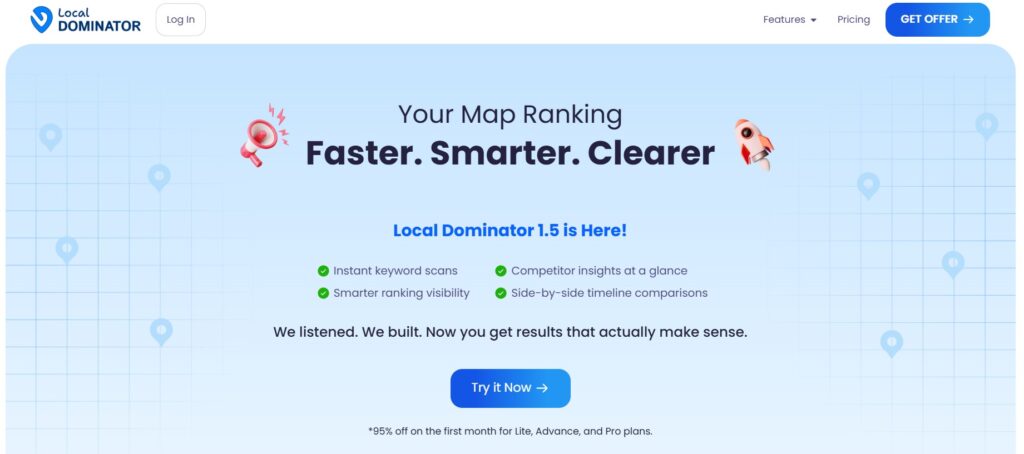
Local Dominator focuses specifically on local SEO reporting, audits, and competitor benchmarking at a very practical, agency‑friendly level.
It gives you white‑label reports, automated local SEO scans, and geo‑grid tracking so you can see how clients perform across a map, not just at a single location.
It’s 360 Local Audit pulls together Google Business Profile data, citations, reviews, technical SEO, backlinks, and hyperlocal rankings into one strategic report.
For agencies, that means you can quickly benchmark a prospect against four competitors and instantly show where they’re winning or losing in local search.
- Best for: Agencies that sell deep local SEO audits and “dominate your neighborhood” style offers.
- Why it’s a good alternative: Use Local Dominator when you want more detailed local audits and geo‑grid tracking, with strong white‑label automation.
GMB Radar
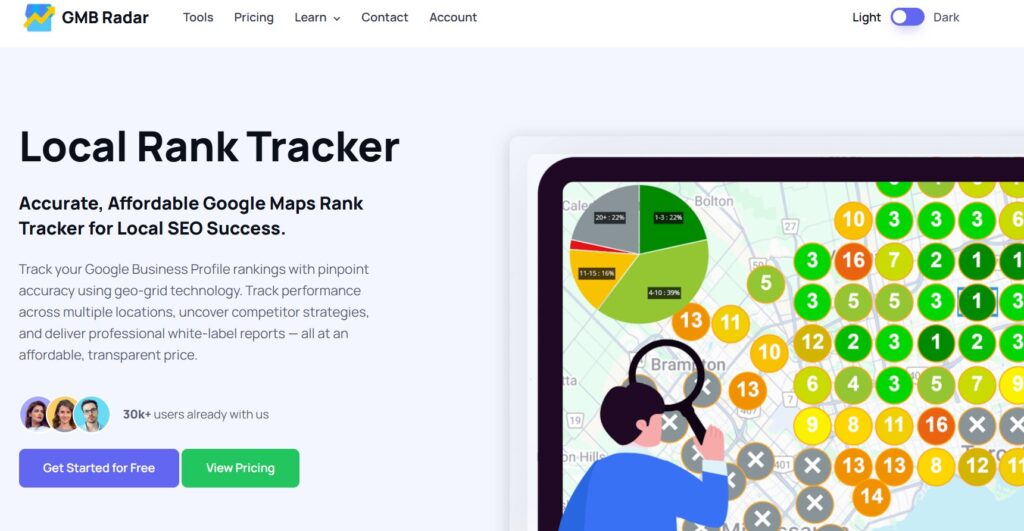
GMB Radar is a specialist tool for Google Maps and local pack rankings with a focus on geo‑grid scans and white‑label reporting. Instead of just telling you “you’re position 4 for keyword X,” it shows a grid of map results around your target area, so you can visualize exactly where a client appears in the local pack.
It also tracks website rankings alongside Maps results and can generate white‑label reports that agencies can share directly with clients. This makes it ideal if your main promise to clients is “we will move you up in the local pack and on the map,” and you need visuals to prove it.
- Best for: Agencies that are heavily focused on Google Maps rankings and want ultra‑granular, geo‑grid reporting.
- Why it’s a good alternative: Use GMB Radar when you need precise map‑based rank tracking but don’t need broader demographic and keyword reports.
BrightLocal
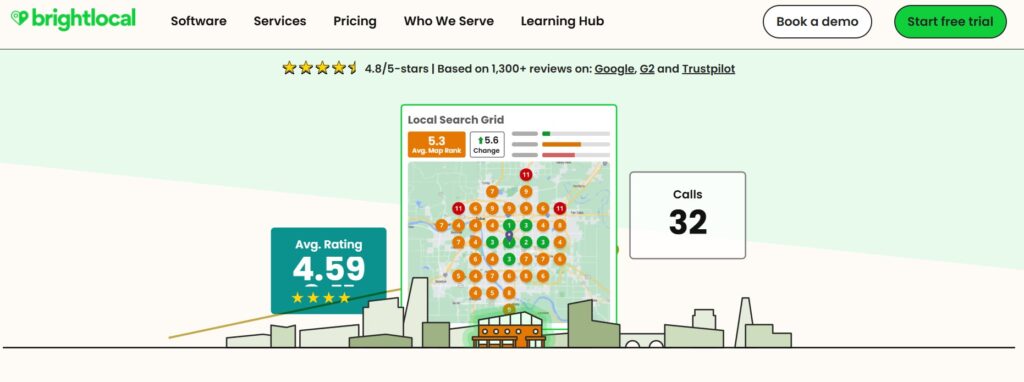
BrightLocal is one of the more established names in local SEO, offering tools for audits, citation building, rank tracking, and review management.
It’s built to be an all‑in‑one local SEO platform, not just a reporting layer, so agencies can both diagnose and act: fix citations, manage reviews, run audits, and track results in one system.
For reporting, BrightLocal includes local rank checker tools, Google Business Profile audit features, and reputation reports that agencies can white‑label and send to clients.
If you want mature, stable SplashDash alternatives with a broad toolkit, BrightLocal is often the go‑to.
- Best for: Agencies that want a proven, all‑round local SEO toolset with strong reporting and operational features.
- Why it’s a good alternative: Use BrightLocal when you want deeper execution tools (citations, reviews, audits) in addition to reporting.
Whatagraph
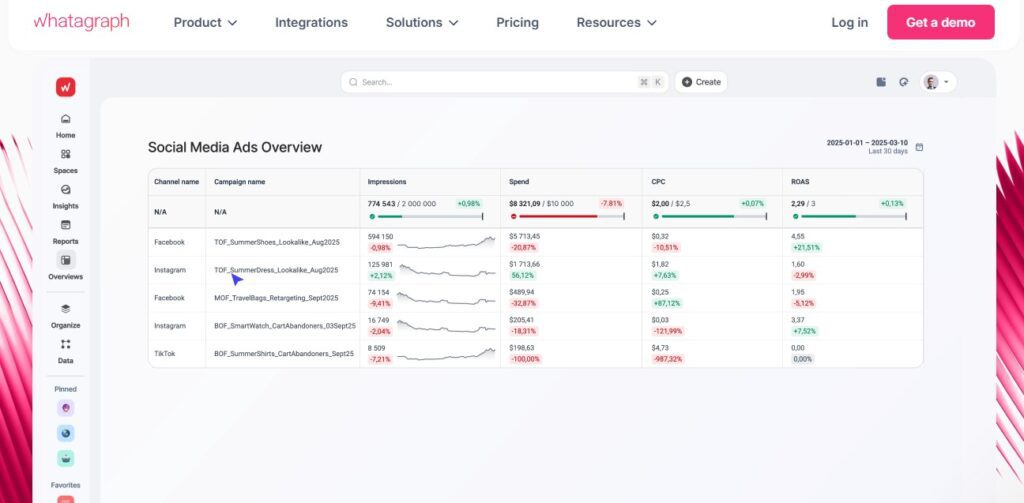
Whatagraph is a flexible, cross‑channel reporting tool that connects data from SEO tools, analytics platforms, and marketing channels into highly visual, customizable reports.
It offers specific Local SEO Report templates and integrates with tools like Google Analytics, Search Console, Ahrefs, Semrush, and more, so you can build a “single source of truth” for each client.
From an agency perspective, the big win is white‑labeling and layout control: you can match your branding, combine metrics from multiple tools, and automate report delivery on schedule.
If you already have a stack of local SEO SplashDash alternatives you love, Whatagraph becomes the reporting and visualization layer on top.
- Best for: Agencies that juggle multiple SEO tools and marketing channels and want one branded reporting experience for everything.
- Why it’s a good alternative: Choose Whatagraph when you need flexible, cross‑tool reporting more than pre‑defined reports tied to a single data source.
How to Choose the Best SplashDash Alternatives
Define your primary reporting use case
Decide whether you mainly need fast audits for sales calls or recurring monthly reports for retainers. This will narrow down which SplashDash alternative actually fits how you work.
Decide between one‑off audits vs ongoing dashboards
If you focus on audits and prospecting, tools like SplashDash, Local Dominator, and GMB Radar fit better. For always‑on dashboards and scheduled PDFs, AgencyAnalytics and Whatagraph make more sense.
Clarify if you sell classic SEO or AI SEO
If your offer is still traditional local SEO, most tools on this list will work. If you want to lead with AI search and LLM visibility, you’ll need an AI‑centric alternative like Radarkit in the stack.
Choose all‑in‑one vs specialist tools
All‑in‑one platforms like BrightLocal and Local Dominator give you audits, citations, reviews, and reporting under one roof.
Specialist SplashDash alternatives like GMB Radar and Radarkit go deeper into map rankings or AI visibility, but won’t replace your whole toolkit.
Map tools to each stage of your client lifecycle
Pick one tool for prospecting and audits (e.g., SplashDash or Local Dominator), one for AI/visibility (e.g., Radarkit), and one for monthly reporting (e.g., AgencyAnalytics or Whatagraph). Thinking in stages helps you combine rather than overpay for overlapping features.
Conclusion
SplashDash is an excellent starting point for agencies looking to generate polished local SEO reports, sales decks, and competitive overviews in minutes rather than hours.
But as your services expand into AI visibility, multi‑channel reporting, or deeper local execution, pairing or swapping it with tools like Radarkit, AgencyAnalytics, Local Dominator, GMB Radar, BrightLocal, or Whatagraph can give you a far more complete setup.
Think of SplashDash as one piece of your “local visibility operating system.” The right SplashDash alternatives isn’t just a replacement; it’s the tool that fills the gaps in how you pitch, prove, and scale your local SEO services.
FAQs: SplashDash Alternatives
Is SplashDash still worth using if I adopt one of these alternatives?
Yes. SplashDash remains very strong for fast, visual local SEO and competitive overview reports you can use in prospecting and strategy calls, even if you use other tools for ongoing tracking or AI visibility.
Which tool is best if I care most about AI search and LLMs?
Radarkit is the clear choice here, since it’s built around AI search visibility, LLM citation tracking, and GEO content optimization for tools like ChatGPT, Gemini, and Perplexity.
What should I pick for deep local map rankings and geo‑grid reports?
GMB Radar and Local Dominator both provide geo‑grid tracking and white‑label reports that make it easy to show clients exactly how they appear in local packs across a service area.
Which tool works best as a general reporting hub for my agency?
If you want to consolidate SEO, PPC, social, and local into a single reporting experience, AgencyAnalytics and Whatagraph stand out for their integrations, templates, and white‑labeling options.
Can I realistically use more than one SplashDash alternatives at the same time?
Absolutely. Many agencies use a combination, for example, SplashDash for audits and sales decks, Radarkit for AI visibility, GMB Radar for geo‑grid Maps tracking, and Whatagraph or AgencyAnalytics as the client reporting layer.