Searchable AI Alternatives are getting more attention as brands, marketers, and agencies look for better ways to understand how they appear across AI-driven search and answer platforms.
Searchable is generally positioned as an AI visibility tool, which means it helps teams monitor and evaluate how their brand is showing up in AI search experiences.
That said, no single platform is the perfect fit for everyone. Some teams want deeper reporting, others care more about ease of use, and many are simply looking for a tool that matches their budget and workflow without adding extra complexity.
As the AI search space becomes more competitive, comparing different options is the smartest way to find a platform that actually supports your goals.
In this guide, we’ll walk through 10 Searchable alternatives worth considering. Some are better suited for agencies managing multiple clients, while others make more sense for in-house teams that want clear insights, practical reporting, and a simpler way to track brand visibility across AI platforms.
So, without any further ado, let’s get started.
Quick Pick Criteria
- Radarkit – Best Overall for AI visibility tracking with content optimization and outreach workflows
- Profound – Best for larger teams that need broad AI visibility reporting and answer-engine analytics
- Athena HQ – Best for B2B teams that want visibility data connected to AI search actions
- Peec AI – Best for marketing teams that want prompt tracking, citation analysis, and a polished interface
- Promptwatch – Best for teams that want AI visibility, citation research, and crawler insights together
- LLMrefs – Best for broad LLM coverage and high-volume prompt tracking
- Otterly AI – Best for agencies and SEO teams that need self-serve monitoring and reports
- Ahrefs Brand Radar – Best for teams already using Ahrefs for SEO and competitive research
- SE Ranking – Best for SEO professionals who want AI tracking inside a wider SEO toolkit
- Atomic AGI – Best for teams that want AI prompt tracking linked to traffic, conversion, and technical SEO data
Quick Comparison Table
| Tool | Starting price | AI coverage | Best for |
|---|---|---|---|
| Radarkit | $29/month | All Major AI Engines including ChatGPT, Perplexity, Google AI Overviews, Google AI Mode, Gemini, Claude, Copilot, Grok, and mor with 50+ locations | Startups and lean teams needing tracking, content, and outreach workflows |
| Profound | $99/month | ChatGPT only on Starter | Larger teams focused on AI visibility reporting |
| Athena HQ | $295/month | ChatGPT, Perplexity, Google AI Overviews, Google AI Mode, Gemini, | B2B teams needing enterprise-grade AI visibility actions |
| Peec AI | $95/month | Choice of ChatGPT,Copilot, Gemini, and Perplexity | Marketing teams needing prompt and citation analysis |
| Promptwatch | $95/month | Up to four models, including OpenAI, Perplexity, Google, Claude, Gemini, Meta, DeepSeek, and Grok | Technical SEO teams needing crawler and visitor analytics |
| LLMrefs | $79/month | 11+ AI platforms, including ChatGPT, Perplexity, Claude, Gemini, Grok, and AI Overviews | Teams needing broad model coverage |
| Otterly AI | $29/month | ChatGPT, Google AI Overviews, Perplexity, and Copilot; additional engines available | Agencies and SEO teams wanting self-serve monitoring |
| Ahrefs Brand Radar | $129/month | Google AI Overviews, Google AI Mode, ChatGPT, Perplexity, Gemini, and Copilot | Existing Ahrefs users doing SEO and competitor research |
| SE Ranking | $129/month | AI visibility tracking within its wider SEO toolkit | SEO professionals wanting an all-in-one platform |
| Atomic AGI | $40/month | AI search monitoring linked with traffic, conversions, and technical SEO data | Teams connecting AI visibility to business performance |
How to Choose the Right Searchable Alternative?
Choose the AI Platforms Your Buyers Use
Your tool should support the AI platforms where potential customers research products, services, and solutions. For many B2B brands, ChatGPT, Google AI Overviews, and Perplexity are sensible starting points. You can add Gemini, Claude, Copilot, or Google AI Mode when they are relevant to your audience.
Do not select a tool based only on the number of AI models it lists. Check whether each platform is available in your plan, supported in your target country, and refreshed at a frequency that fits your needs. Multi-engine coverage, location support, and refresh frequency can vary significantly between providers.
Start With High-Intent Prompts
Track prompts that connect to your actual buying journey. Good starting points include category queries, “best” lists, competitor comparisons, alternative searches, product-use-case questions, and questions your sales team hears regularly.
For example, a digital marketing platform could track prompts such as “best AI visibility tracking tools” or “how to track brand mentions in ChatGPT.” These prompts reveal whether your brand appears when a buyer is actively researching solutions.
Compare Mentions and Citations
A brand mention means the AI system names your company in its answer. A citation means the system references your website or page as a supporting source. Both matter, but they often need different actions.
If your brand is mentioned but your pages are not cited, improve the depth, accuracy, structure, and usefulness of the relevant content. If competitors are mentioned while your brand is missing, build stronger category coverage and publish pages that clearly connect your brand with the topic. A useful platform should separate mention tracking from citation tracking.
Check Competitor Intelligence
Competitor tracking helps you understand which brands appear for the prompts you care about and which websites AI tools repeatedly cite. This information can uncover missing topics, weak comparison coverage, and third-party websites that influence AI answers.
Look for a tool that shows competitor mention frequency, citations, share of voice, and prompt-level visibility. Keep in mind that share-of-voice formulas differ across tools, so it is better to track your performance trend within one platform instead of comparing percentage scores across unrelated products.
Look for Useful Actions
A dashboard is only useful when it helps your team decide what to do next. Choose a Searchable Alternative that makes it easier to identify pages to update, topics to cover, cited sources to study, and content gaps to close.
For example, Radarkit combines AI visibility tracking with content optimization, planning, outreach, and AI agent workflows. This can be useful for teams that want to move from a visibility report to an actual content or promotion task without managing several disconnected tools.
Review Reporting and Integrations
Agencies may need client dashboards, PDF exports, white-label reports, API access, or Looker Studio connections. In-house teams may care more about Slack alerts, Notion integration, task workflows, and analytics connections.
Review these details before committing to a subscription. A platform can have strong tracking capabilities but still create manual work if its reports do not fit your existing SEO, content, and client-reporting process.
Match Plans to Prompt Volume
Most AI visibility platforms price their plans around tracked prompts, scans, credits, projects, locations, or supported engines. Estimate the number of prompts you need before comparing plans, then leave room for new product pages, competitors, and topics.
A smaller prompt list with clear commercial intent is usually more valuable than a huge list of low-priority questions. Start with your highest-value topics, review the data regularly, and add prompts when a new category, product, campaign, or competitor becomes important.
Choose a Tool That Fits Your Workflow
The best Searchable Alternatives are not automatically the ones with the longest feature list. It is the platform your team can use consistently to measure visibility, identify gaps, improve content, and monitor progress over time.
If you need a budget-friendly AI visibility platform with content and outreach workflows, Radarkit is worth considering. If you mainly want deeper enterprise reporting, broad AI coverage, or an add-on to an existing SEO suite, compare the other options based on your team’s specific needs.
10 Best Searchable Alternatives: Tried and Tested
1. Radarkit
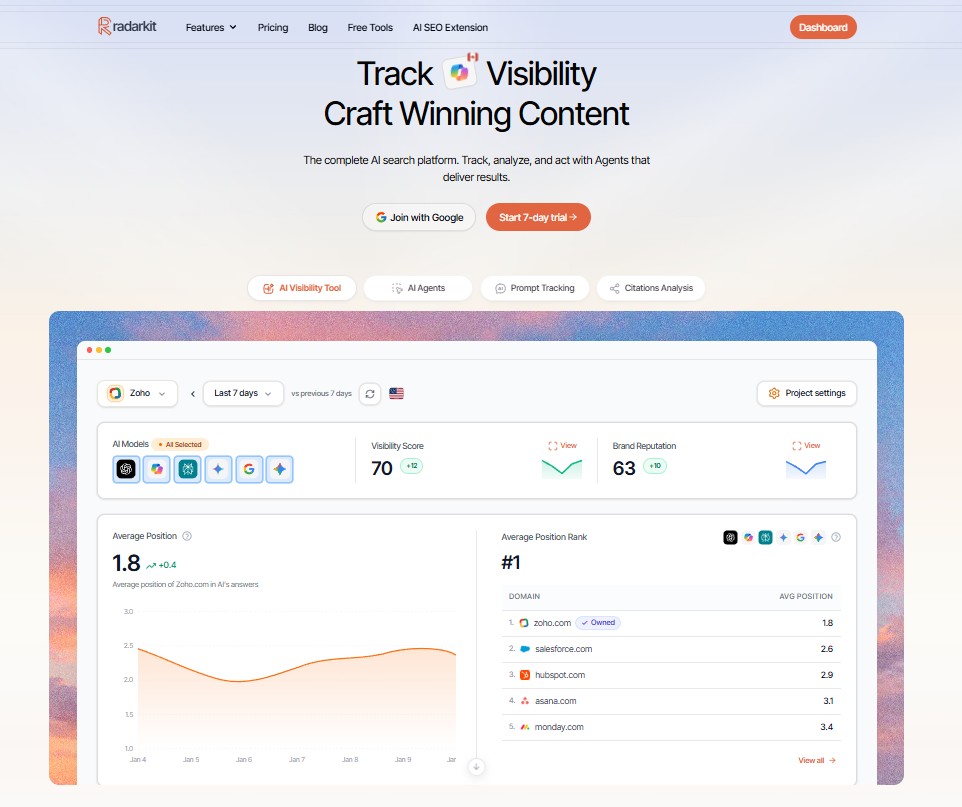
Radarkit is an AI search tracking and content optimization platform built for marketers who want to monitor visibility and act on the findings in the same workflow. It combines prompt tracking, citation analysis, content creation support, and AI agent workflows.
Why It’s a Strong Alternative
Radarkit is useful when your team needs both measurement and execution. You can monitor where your brand appears, identify content or citation gaps, and turn those insights into content, outreach, and planning work without switching between multiple tools.
It is particularly practical for a growing company that needs an affordable entry point and wants to build a repeatable AI search workflow.
Key Features
- AI Share of Voice: Compare your brand’s presence with competing domains to see which websites AI assistants reference most often for your tracked prompts.
- Location-Based Tracking: Run the same prompt from 50+ countries through residential IPs. This helps you spot market-specific citations, brand mentions, and competitor results.
- NLP and Citation-Led Content: Identify the entities, terms, and information patterns present in AI-cited sources, then use them to build more complete content for AI search.
- GEO Writer: Create or refresh AI-search content using citation patterns, NLP terms, query fanouts, and competitor context. It can be used even when Google Search Console data is not available.
- Query Fanout Tracking: See the related questions and subtopics AI platforms connect to a main query. This gives writers a clearer idea of the sections and information a page may need.
- AI Traffic Monitoring: Track which AI platforms bring visitors to your website, so you can separate real referral traffic from simple brand mentions.
- AI Agents: Radarkit includes agents for strategy, content work, outreach, Reddit research, and in-platform assistance. Each agent works from your brand kit and Radarkit data to keep tasks relevant to your visibility goals.
- Plan Agent: Reviews Search Console and AI citation data, identifies visibility gaps, creates a strategy sheet, and routes each action to the appropriate agent.
- Outreach Agent: Finds authority websites that AI answers cite for competing brands, searches for contact details, drafts brand-aligned emails, and can send outreach through Gmail.
- Reddit Agent: Reviews AI-cited Reddit threads in your category, shows where competitors are discussed instead of your brand, and surfaces the conversation so you can assess relevant participation opportunities.
- Content Agent: Connects an existing article to a tracked prompt, extracts important entities, adds query fanouts, and prepares an optimized version in the editor.
- Chat Agent: Provides chat-based help inside Radarkit for day-to-day questions and tasks, with monthly message limits that vary by plan
Best For
The platform is a strong fit for startups, agencies, and lean SEO teams that do not want AI visibility data to remain limited to a reporting dashboard.
Plan and Pricing
| Plan | Price | Billing | Projects | Prompts tracked | Refresh frequency | Locations | Key extras |
|---|---|---|---|---|---|---|---|
| Lite | $29 / month | Monthly | 2 | 15 | Every 72 hours | 50+ | Content, Outreach, Reddit, Chat Agents; GSC; AI Traffic Analytics |
| Growth | $79 / month | Monthly | 5 | 50 | Daily | 50+ | All Lite features; higher agent limits; AI Traffic Analytics |
| Pro | $139 / month | Monthly | 10 | 100 | Daily | 50+ | All Growth features; more seats; higher reporting limits |
| Enterprise | Custom / annual | Annual | Unlimited | Custom | Daily or weekly | 70+ | Everything in Pro plus API, SSO, unlimited seats, dedicated manager |
2. Profound
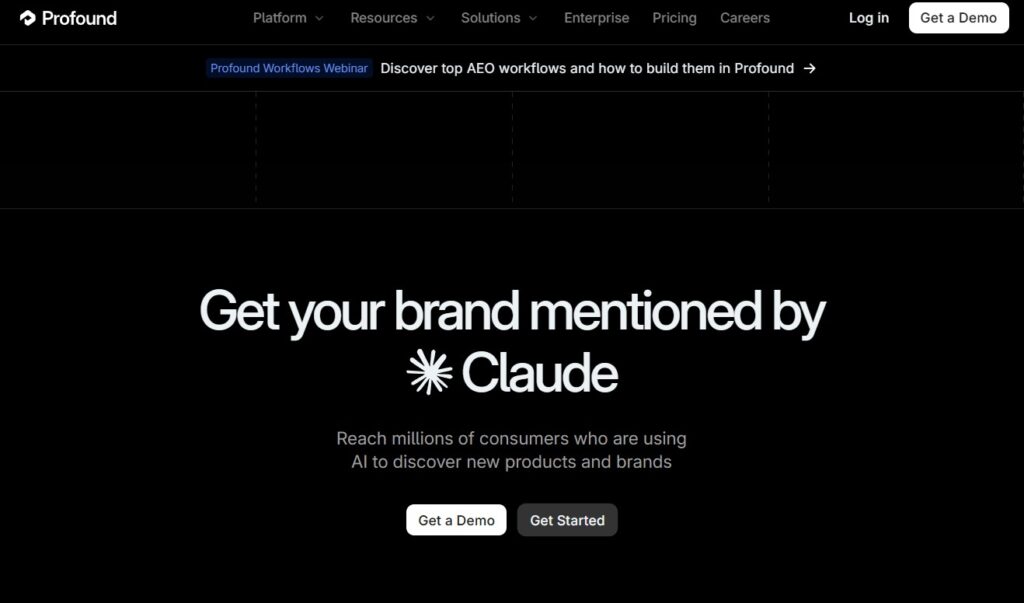
Profound is an answer engine optimization platform for companies that need a broad picture of AI search performance. It helps brands measure mentions, citations, sentiment, share of voice, and visibility across AI-generated answers.
Best For
It suits established SEO, content, and growth teams that want deeper AI search analytics and have the budget for a larger platform.
Key Features
- Answer Engine Insights: Profound measures brand mentions, citations, share of voice, and sentiment within AI-generated answers across supported assistants.
- Prompt Volume research: Its prompt research capabilities help teams explore the questions people ask AI systems, then use that information for content and topic planning.
- Actions, workflows, and agents: Profound includes workflow features intended to move from visibility findings to optimization projects for AEO, GEO, content, and PR work.
Plan and Pricing
| Plan | Price | Answer Engines tracked | Prompts tracked / month | Key extras |
|---|---|---|---|---|
| Starter | $99 / month | ChatGPT only | 50 prompts, 1,500 responses | Email support, 1 language, 1 region, 100 agent credits |
| Growth | $399 / month | 3 engines: ChatGPT, Perplexity, Google AI Overviews | 100 prompts, 9,000 responses | CSV/JSON export, 400 agent credits, 4 opportunities/week |
| Enterprise | Custom pricing | Up to 10 Answer Engines tracked | Custom prompt plan | Multiple companies, API, SSO/SAML, SOC2, Slack, specialist support |
Drawbacks
The starter plan only has access to ChatGPT tracking, which is not worth the price.
3. Athena HQ
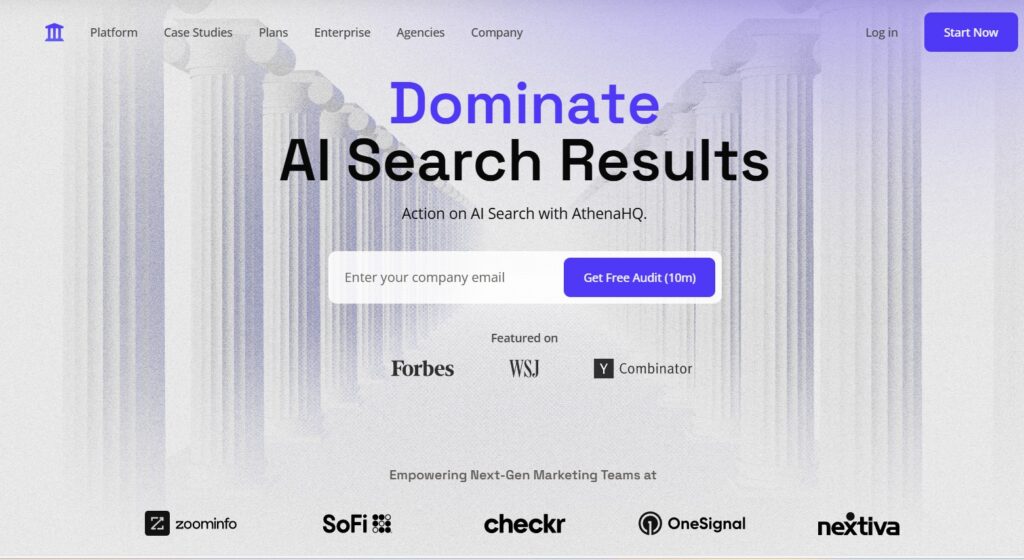
Athena HQ is an AI search visibility platform that helps teams track brand performance and work on improvements across AI-powered search. Its product is designed around turning AI visibility data into organized, actionable work.
Best For
It is a good fit for B2B marketing teams that want more than reporting and prefer an execution-focused workflow.
Key Features
- Multi-model tracking: Athena HQ tracks visibility across more than eight LLMs and AI search platforms in real time.
- Brand and competitor monitoring: It helps marketers track brand mentions, sentiment, citations, and competitor performance in conversational AI responses.
- Optimization workflows: The platform translates visibility findings into action items and workflows, helping teams spend less time manually interpreting reports.
Plan and Pricing
| Plan | Price | Credits | Models covered | Key features |
|---|---|---|---|---|
| Starter | $295 / month | 3,600 credits/month (1 credit = 1 AI response) | ChatGPT, Perplexity, AI Overviews, AI Mode, Gemini, Claude, Copilot, Grok, more on request | Visibility across 9 models, API access, integrations, CSV export, on-page/off-page actions, content optimization agent, self-learning improvements |
| Enterprise | Custom pricing | Custom credits (1 credit = 1 AI response) | Same core plus advanced enterprise features | Knowledge Base, Oracle discrepancy detection, Athena Citation Engine, SSO, audit logs, multi-region/language, persona targeting, Recommendation Engine, BI dashboards, white-glove setup |
Drawbacks
The starter plan is very expensive and may not fit starters’ and freelancers’ budgets.
4. Peec AI
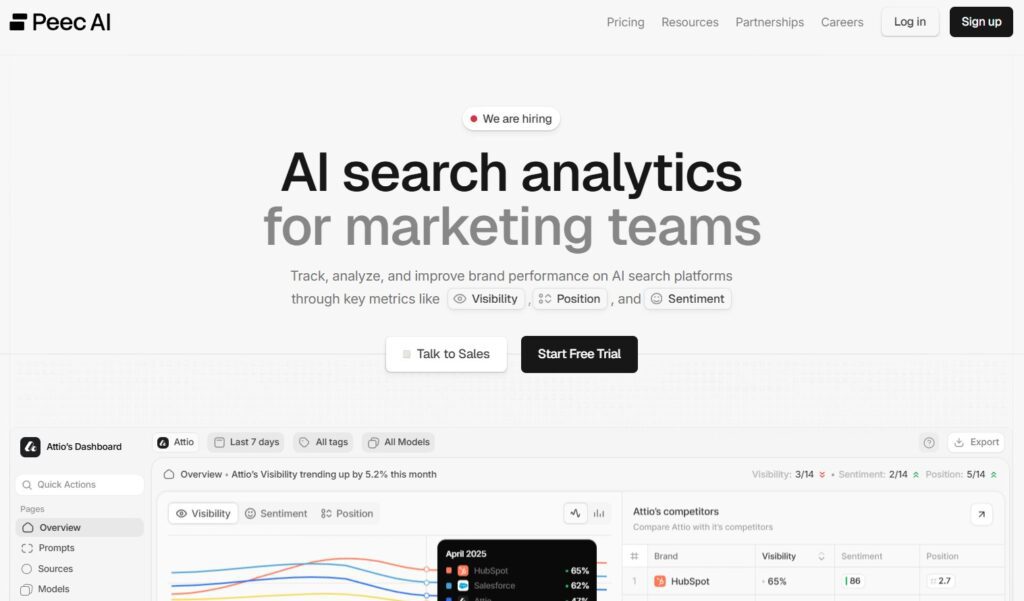
Peec AI is an AI search analytics platform for marketing teams. It focuses on understanding brand visibility, prompt performance, citations, competitor activity, and AI search trends.
Best For
It is a suitable option for SEO and content teams that want a dedicated AI visibility workspace with collaboration and reporting support.
Key Features
- Prompt-level performance tracking: Peec AI measures brand visibility, ranking position, and sentiment for target prompts across AI search platforms.
- Citation-source analysis: It shows which pages and domains AI systems cite, helping teams study source patterns and discover content opportunities.
- Prompt discovery and integrations: The tool suggests prompts based on a company’s website and topic areas, while supporting integrations with Slack, Notion, Segment, Looker Studio, and APIs.
Plan and Pricing
| Plan | Price | Prompts included | Models included (base) | Projects | Countries per project | Tracking frequency | Key extras |
|---|---|---|---|---|---|---|---|
| Starter | $95 / mo | 50 prompts | Choose 3 models (ChatGPT, AI Mode, AI Overviews, Copilot, Perplexity, Gemini) | 1 | 1 | Daily | Unlimited users |
| Pro | $245 / mo | 150 prompts | Choose 3 models (same set) | 2 | 3 | Daily | Unlimited users |
| Advanced | $495 / mo | 350 prompts | Choose 3 models (same set) | 5 | 3 | Daily | Unlimited users, multi-country, Looker Studio integration |
Drawbacks
Costs can grow as you add prompts, countries, brands, or advanced reporting needs. Which can eat fastly eat your budget for a project.
5. Promptwatch
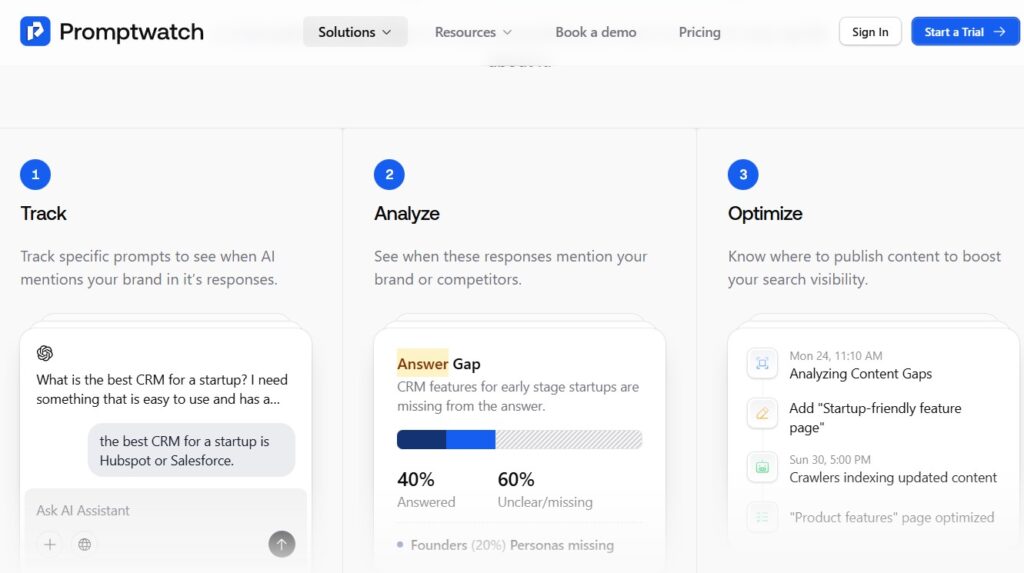
Promptwatch is an AI visibility and GEO platform that combines prompt tracking with citation analysis, crawler logs, and visitor analytics. It is useful for teams that want to connect technical site activity with AI search monitoring.
Best For
Its feature set may appeal to technical SEO teams, agencies, and marketers who want more context than simple AI mention tracking.
Key Features
- AI visibility monitoring: Promptwatch tracks brand mentions and citations across ChatGPT, Claude, Perplexity, and Gemini.
- Crawler and visitor analytics: The platform includes crawler logs and visitor analytics to help teams monitor technical AI-related activity around their site.
- Citation and content-gap research: It provides citation tracking, competitor research, content-gap detection, and real-time prompt monitoring.
Plan and Pricing
| Plan | Price | Projects | Models tracked (max 4) | Responses/month | AEO articles/month | Tracking level | Key extras |
|---|---|---|---|---|---|---|---|
| Essential | $95 / month | 1 | 4 models from OpenAI, Perplexity, Google, Claude, Gemini, Meta, DeepSeek, Grok | 6,000 | 5 | Country level | Knowledge base, MCP & API access |
| Professional | $245 / month | 2 | 4 models (same set) | 18,000 | 15 | Country + state & city level | Agent analytics, MCP & API access |
| Business | $579 / month | 5 | 4 models (same set) | 42,000 | 30 | Country + state & city level | Agent analytics, MCP & API access |
Drawbacks
Its supported AI engine list does not include ChatGPT, which can be a deal-breaker for many agencies, as ChatGPT is one of the most widely used AI engines.
6. LLMrefs
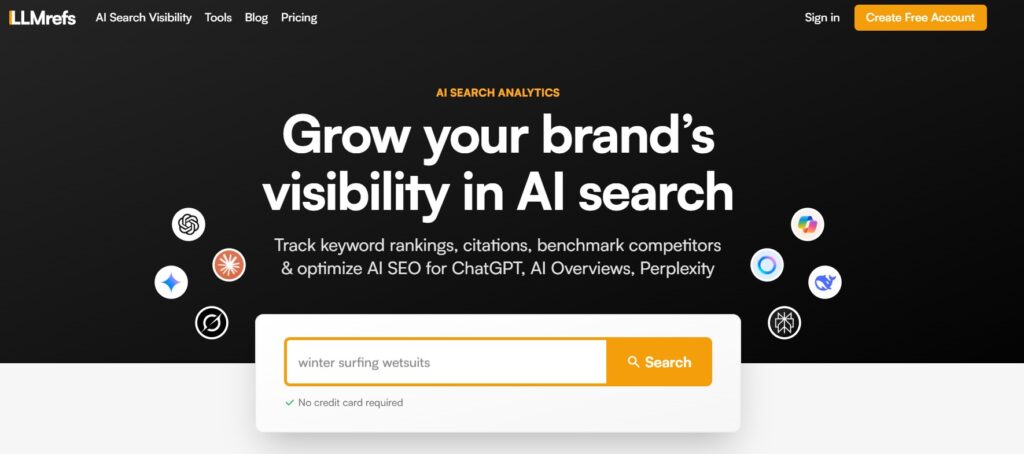
LLMrefs is a generative search-tracking platform that monitors brand rankings, citations, visibility, and competitors across a broad range of AI assistants. It is designed for teams that want a substantial prompt allowance and wide LLM coverage.
Best For
It can be a good match for agencies and in-house teams that need to monitor many prompts without moving to custom enterprise pricing immediately.
Key Features
- Broad AI-platform coverage: LLMrefs monitors brand performance across more than 11 AI platforms, including ChatGPT, Perplexity, Claude, Gemini, Grok, and Google AI Overviews.
- Share of voice and citation reporting: The platform tracks visibility scores, AI rankings, citation frequency, competitors, and cited sources.
- Prompt generation: It can generate prompt ideas from keyword themes and common user questions, helping teams build a more complete tracking list.
Plan and Pricing
It has an all-in-one plan at $79 per month with 500 prompts and access to all engines.
Drawbacks
It only offers one plan, which misses out on many features such as unlimited prompts and advance trackings.
7. Otterly AI
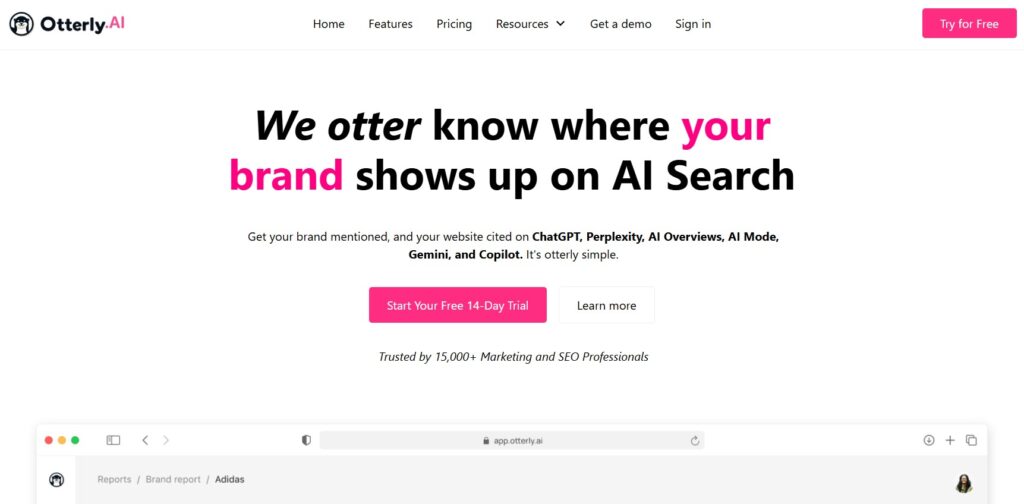
Otterly AI is a self-serve AI search monitoring platform for tracking brand mentions, website citations, competitor visibility, and content opportunities. It supports multiple AI search engines and offers reporting options that suit both SEO teams and agencies.
Best For
It is a practical option for teams that want regular monitoring and clear visibility reports without an enterprise-first buying process.
Key Features
- Brand and citation monitoring: Otterly AI tracks mentions and website citations across ChatGPT, Perplexity, Gemini, Copilot, Claude, Google AI Overviews, and Google AI Mode.
- GEO audits and query research: It provides AI visibility scores, prompt research, query fan-out analysis, content audits, and crawlability checks.
- Agency reporting: The platform supports exports, Looker Studio, API access, MCP access, and country-level monitoring.
Plan and Pricing
| Plan | Price / month | Search prompts | Core AI search engines | GEO URL audits / month | Notes |
|---|---|---|---|---|---|
| Lite | $29 | 15 prompts | ChatGPT, Google AI Overviews, Perplexity, MS Copilot | 1,000 | Unlimited team members, daily tracking, add‑on engines (Claude, AI Mode, Gemini) |
| Standard | $189 | 100 prompts | Same 4 core engines | 5,000 | Unlimited workspaces, Looker Studio, 2,000 API & MCP requests, +100 prompts add‑on ($99) |
| Premium | $489 | 400 prompts | Same 4 core engines | 10,000 | More API/MCP (5,000 each), personal onboarding, +100 prompts add‑on ($99) |
| Enterprise | Custom | Custom prompts | All above + extras | Custom | SSO, custom payment, quarterly GEO health check, dedicated success lead |
Drawbacks
Weekly monitoring may not meet the needs of teams that need daily checks for priority prompts.
8. Ahrefs Brand Radar
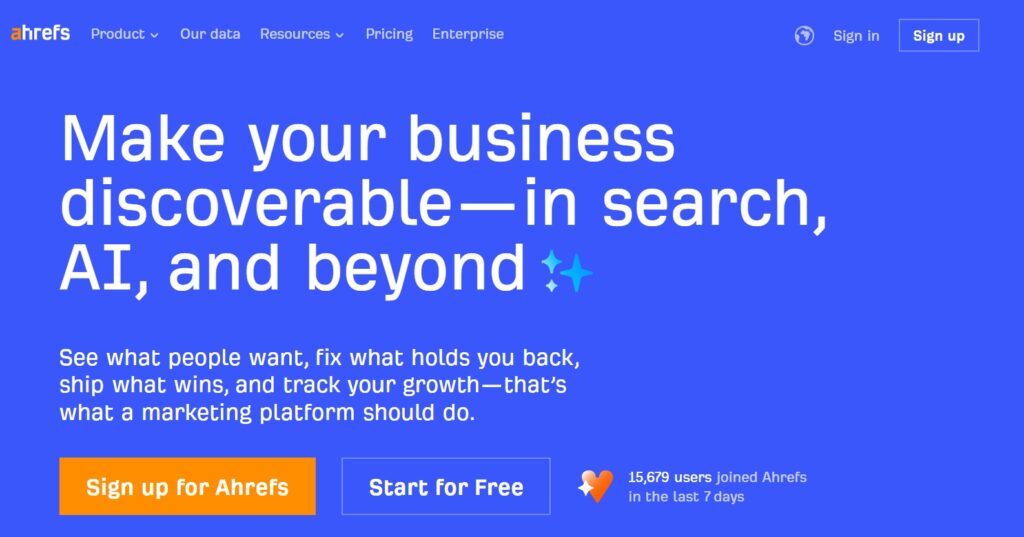
Ahrefs Brand Radar is an AI visibility tool that helps companies discover where their brands appear across AI answers, search, YouTube, Reddit, and TikTok. It sits within the wider Ahrefs ecosystem, making it valuable for teams already using Ahrefs for SEO research.
Best For
The tool can help brands move from traditional search data toward a broader view of brand discovery and AI-generated recommendations.
Key Features
- Large AI prompt dataset: Brand Radar analyzes AI visibility through more than 405 million search-backed prompts that reflect real keyword-based questions.
- Share of voice and citation gaps: It benchmarks brand share of voice against competitors, reveals top cited pages and domains, and helps identify gaps in AI mentions and citations.
- Custom prompt monitoring: Users can track their own prompts by choosing the AI assistant, location, and refresh frequency. It supports Google AI Overviews, Google AI Mode, ChatGPT, Perplexity, Gemini, and Copilot.
Plan and Pricing
Drawbacks
- Costs can increase quickly when tracking multiple AI indexes or a high volume of custom prompts.
- Teams that do not use the wider Ahrefs product may find the tool more than they need.
9. SE Ranking
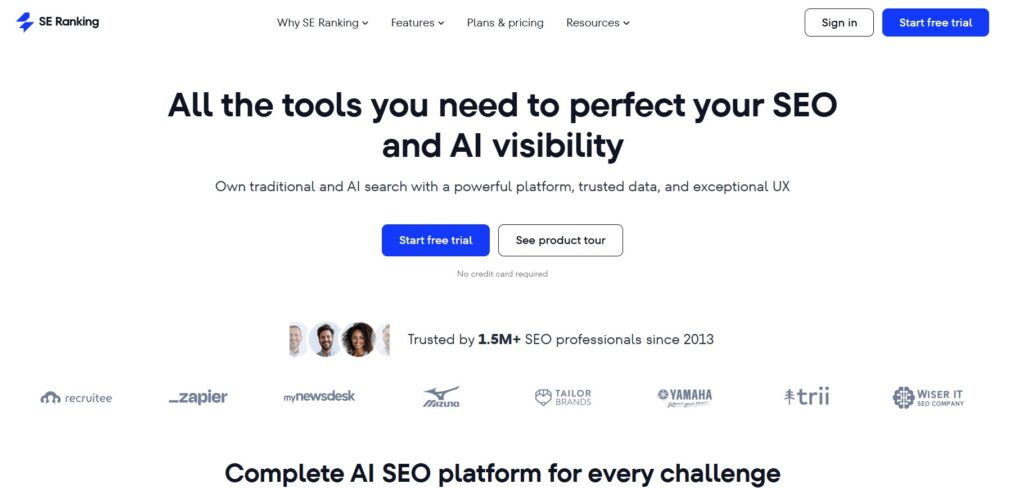
SE Ranking is an all-in-one SEO platform with an AI Visibility Tool and AI Search add-on. It helps users monitor brand mentions and links in AI-generated responses, review competitors, and study the sources AI systems use.
Best For
It makes sense for teams that already rely on SE Ranking for rank tracking, site audits, backlinks, keyword research, and SEO reporting.
Key Features
- AI mention and link tracking: SE Ranking identifies brand mentions and linked pages that appear in AI-generated answers.
- Competitor visibility comparisons: It allows teams to compare AI search visibility against competing brands.
- Cited-source analysis: The tool reveals sources cited in AI answers, helping SEO teams spot relevant content and citation opportunities.
Plan and Pricing
| Plan | Price / month (monthly) | Projects | Manager seats | Keywords / day | AI prompts / day | GEO domains | Pages audited / month | API credits / month |
|---|---|---|---|---|---|---|---|---|
| Core | $129.00 | 10 | 1 | 2,000 | 100 | 5 | 250,000 | 25,000 + MCP |
| Growth | $279.00 | 30 | 3 | 5,000 | 250 | 15 | 2,000,000 | 100,000 + MCP |
| Enterprise | Custom | Custom | Custom | Custom | Custom | Custom | Custom | Full API, custom limits |
Drawbacks
- AI visibility is an add-on within a broader SEO suite, rather than the product’s only focus.
- A standalone AI tracking tool may be simpler for teams that do not need full SEO functionality.
10. Atomic AGI
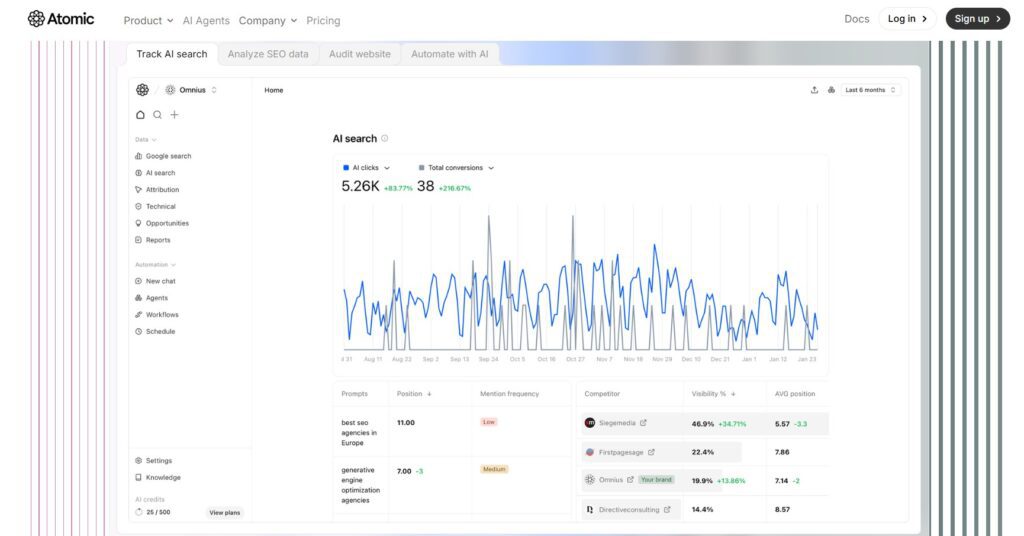
Atomic AGI is an AI search visibility platform for SEO teams that want to connect AI presence with website traffic, conversions, and technical optimization. It focuses on monitoring prompts, measuring visibility, and identifying opportunities to improve how a brand appears across generative search engines.
Best For
It can suit teams that want AI search tracking to sit closer to their technical SEO and performance data.
Key Features
- Prompt and position tracking: Atomic AGI tracks which AI prompts mention a brand, then measures visibility and average position to identify improvement opportunities.
- AI referral and conversion data: It identifies which generative engines drive visitors to a website and reports visitor volume, conversions, and average session time by platform.
- Full-site technical audits: The platform audits crawlability, metadata, content structure, indexing, internal links, and LLM-related signals that can affect Google and AI-search performance.
Plan and Pricing
| Plan | Price / month | Per project | History window | Users included | AI prompts tracked | AI credits / usage | Key extras |
|---|---|---|---|---|---|---|---|
| Agentic | $40 / mo | Per project | 16 months | 4 users | 25 prompts every 72h | 400 AI credits | Automations, custom reports & schedules, AI agents |
| Team | $100 / mo | Per project | 16 months | 10 users | 40 prompts every 48h | 2.5x usage on AI models | Higher AI limits, more project capacity, priority features, AI workflows |
Drawbacks
Brands that only want simple mention monitoring may prefer a lighter, lower-cost tracker.
FAQs
Which Searchable Alternative is best for startups?
Radarkit and Otterly AI are good options for startups that want accessible pricing and practical AI search tracking. Radarkit is especially useful for teams that also need content optimization and outreach workflows, while Otterly AI is a strong self-serve choice for monitoring and reporting.
What AI search metrics should I track?
Track brand mentions, citations, share of voice, cited URLs, AI-platform performance, competitor mentions, sentiment, prompt-level changes, and traffic from AI platforms. If your analytics setup supports it, also review conversions and engagement from AI referrals.
How often should I check my AI search visibility?
Review priority prompts weekly and conduct a fuller visibility review monthly. Running the same prompt set across the same AI platforms at fixed intervals gives you a reliable baseline and makes changes easier to spot over time.
Should I track every prompt across every AI platform?
No. Start with the AI platforms your customers use and a focused set of high-intent prompts. Track around 20 to 40 prompts across two or three models first, then expand when you understand which categories, questions, and locations matter most.
Can AI visibility tracking show business results?
Yes, when your tool or analytics setup connects AI referrals with website sessions, engagement, demo requests, conversions, CRM notes, or closed revenue. Visibility data is most useful when you review it alongside the outcomes that matter to your business, rather than treating mentions as the only success metric.
Conclusion
Searchable Alternatives solve a simple problem that traditional SEO tools can’t: they show how often your brand appears, gets cited, and competes inside real AI-generated answers. When you track meaningful prompts, study citations and competitors, and connect that data back to content and outreach, AI visibility stops being a mystery and becomes something you can actively improve.
Among all the options, Radarkit stands out because it treats AI visibility as both analytics and execution. It tracks how your brand appears across major AI assistants, highlights citation and share-of-voice patterns, and gives you AI-driven workflows for content and outreach in the same place.
For startups, agencies, and lean teams who want one practical hub for monitoring and acting on AI search visibility, Radarkit is the best overall Searchable Alternative.