In this article, we are going to explore the 10 best Mentions.so alternatives for tracking AI brand visibility, citations, competitors, and AI search performance.
Mentions.so is a useful platform for monitoring how your brand appears in AI-generated answers across ChatGPT, Gemini, Claude, Perplexity, Google AI Overviews, and other AI tools. However, different businesses need different types of AI visibility data. Some teams need local AI tracking, others need detailed citation analysis, AI shopping data, keyword-based prompt tracking, international monitoring, automated content workflows, or traditional SEO tools in the same dashboard.
We will review each alternative based on AI platform coverage, prompt and keyword tracking, brand mention and share-of-voice reporting, citation and source analysis, competitor monitoring, AI traffic and conversion attribution, content optimization and GEO recommendations, reporting and agency features, and overall pricing value.
This will help you choose the right Mentions.so alternatives for your agency, SEO team, ecommerce brand, SaaS company, local business, or enterprise marketing program.
Quick Pick Criteria
-
Choose Radarkit AI if you need local AI tracking, country-level visibility, query fanouts, content agents, outreach workflows, and AI visibility actions.
-
Choose Scrunch AI if you are an enterprise brand that needs monitoring, audits, content optimization, AI crawler analysis, AI traffic data, and direct AI content delivery through AXP.
-
Choose AthenaHQ if you want actionable AI search insights such as content recommendations, citation potential analysis, technical AI search checks, and brand-message accuracy analysis.
-
Choose Peec AI if you want simple visibility dashboards with detailed source data, fanouts, citations, AI shopping analytics, AI referrals, local GEO, crawlability audits, and reporting.
-
Choose Profound if you need advanced enterprise analytics and no-code AI agents for research, content creation, content refreshes, FAQ generation, and publishing workflows.
-
Choose LLMrefs if citations and source authority matter most, and you want keyword-first tracking with automatic prompt fanouts.
-
Choose OtterlyAI if you have a limited budget but still need international AI monitoring, GEO audits, citations, and AI crawler checks.
-
Choose SE Ranking or Semrush if you want AI visibility inside your SEO stack alongside keyword research, traditional rankings, site audits, backlinks, and wider SEO reporting.
Comparison Table of 10 Mentions.so Alternatives
| Tool | Starting price | AI coverage | Best for |
|---|---|---|---|
| Radarkit AI | $29/month | ChatGPT, Perplexity, Gemini, Google AI Overviews, Google AI Mode, and 50+ countries | Agencies, local businesses, and content teams that need local AI tracking, country-level visibility, query fanouts, and action-focused AI agents |
| Scrunch AI | $250/month (annual) | ChatGPT, Perplexity, Google AI, Microsoft Copilot | Enterprise brands that need monitoring, audits, content optimization, AI crawler analysis, AI traffic data, and AXP content delivery |
| AthenaHQ | Free plan, paid from $295/month | ChatGPT, Perplexity, Google AI | Teams that want actionable AI search insights, content recommendations, citation potential analysis, and brand-message accuracy checks |
| Peec AI | $80/month (annual) | ChatGPT, Perplexity, Gemini, Copilot | Marketing teams that want simple visibility dashboards with detailed source data, fanouts, citations, AI shopping analytics, AI referrals, local GEO, and crawlability audits |
| Profound | $99/month | ChatGPT, Perplexity, Claude, Gemini, Grok | Enterprise content teams that need advanced analytics and no-code AI agents for research, content creation, refreshes, FAQ generation, and publishing |
| LLMrefs | $79/month | ChatGPT, Perplexity, Google AI Overviews | SEO teams that want keyword-first tracking, automatic prompt fanouts, and strong citation and source authority analysis |
| OtterlyAI | $29/month | ChatGPT, Perplexity, Google AI Overviews | Small teams and businesses with a limited budget that need international AI monitoring, GEO audits, citations, and AI crawler checks |
| SE Ranking AI Search Toolkit | From $71.20/month (annual) | Google AI Overviews, Google AI Mode, ChatGPT, Gemini | SEO teams that want AI visibility inside a full SEO suite with rankings, audits, backlinks, and reports |
| Semrush AI Visibility Toolkit | $99/month per domain (annual) | ChatGPT Search, Google AI Mode, Google AI Overviews, Gemini | Existing Semrush users that want AI visibility alongside keyword research, site audits, competitor analysis, and SEO reporting |
| Rankscale AI | From €20/month | ChatGPT, Perplexity, Claude, Gemini, Google AI Overviews | Agencies, ecommerce companies, and international brands that need broad AI engine coverage, AI shopping data, product visibility, and flexible credit-based monitoring |
What Is Mentions.so?
Mentions.so is an AI search optimization platform that helps brands track, analyze, and improve how they appear in AI-generated answers. It supports ChatGPT, Gemini, Claude, Perplexity, Google AI Overviews, Grok, DeepSeek, and Llama.
Mentions.so helps businesses track whether their brand appears in relevant AI answers, study competing brands, review sentiment, and identify actions connected to content, citations, and technical improvements.
Key Features of Mentions.so
-
Multi-model monitoring: Mentions.so tracks brand visibility across several AI tools and answer engines.
-
Prompt tracking: Users can add customer-focused questions and monitor how AI platforms answer them over time.
-
Answer inspection: The platform shows the AI-generated response connected to tracked prompts. This helps businesses review the exact wording, recommendation order, and brand context.
-
Competitor comparisons: Mentions.so helps users compare their visibility with competitors for the same prompt set.
-
Sentiment analysis: Teams can review whether AI platforms describe the brand in a positive, neutral, or mixed way.
-
Citation opportunities: The platform identifies source and citation opportunities that may support stronger AI search visibility.
-
AI traffic analytics: Users can study traffic connected to AI platforms and answer engines.
-
Crawler analytics: Mentions.so tracks crawler activity to help users understand AI bot interactions with their site.
-
Insights Board: The platform organizes AI search findings into tasks and action items.
-
Agency features: The Agency plan includes white-labeling, a custom domain, unlimited sites, and client-focused functionality.
Mentions.so Pricing
Mentions.so Starter costs $49 per month and includes 25 prompts and one site. The Pro plan costs $99 per month and includes 50 prompts and five sites.
The Business plan costs $199 per month and includes 100 prompts and 10 sites. The Agency plan costs $399 per month and includes 300 prompts, unlimited sites, a custom domain, white-labeling, priority support, and agency features.
The 10 Best Mentions.so Alternatives
1. Radarkit AI: Best Overall for Agencies and Content Teams
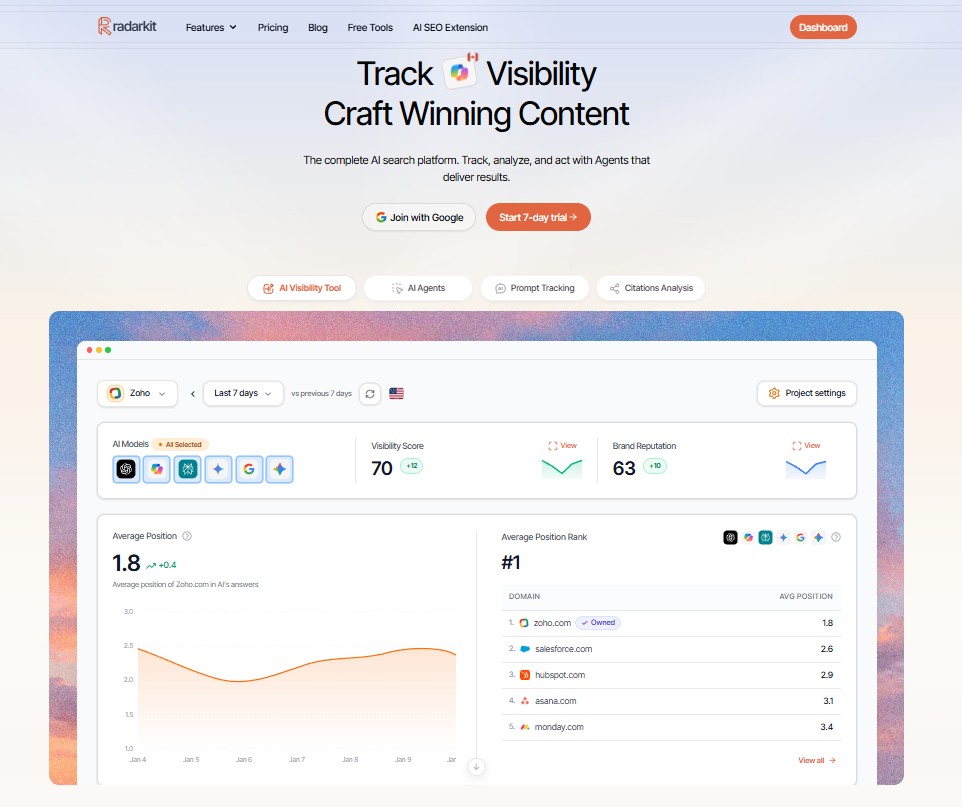
Radarkit AI is a Mentions.so alternative for businesses that want to monitor AI visibility and take action based on what they find. It is built for agencies, SEO teams, SaaS businesses, and local companies that need to understand how they appear in AI answers.
The platform combines AI mention tracking with citation data, competitive research, country-level monitoring, local visibility analysis, AI traffic reporting, query fanouts, and agents that support content and outreach work. This makes Radarkit AI useful for teams that do not want AI visibility data sitting in a dashboard without a clear next step.
Key Features
-
AI Share of Voice: Compare your brand’s presence with competing domains to see which websites AI assistants reference most often for your tracked prompts.
-
Location-Based Tracking: Run the same prompt from 50+ countries through residential IPs. This helps you identify market-specific citations, brand mentions, competitor visibility, and variations in AI-generated results.
-
NLP and Citation-Led Content: Identify the entities, terms, facts, and information patterns used in AI-cited sources, then use those insights to create more complete content for AI search.
-
GEO Writer: Create new or refresh existing AI-search content using citation patterns, NLP terms, query fanouts, and competitor context. It can also be used when Google Search Console data is unavailable.
-
Query Fanout Tracking: See the related questions, subtopics, and follow-up queries AI platforms connect to a main prompt. This gives writers a clearer idea of the sections, entities, and information a page may need.
-
AI Traffic Monitoring: Track which AI platforms send visitors to your website, helping you separate real referral traffic from simple brand mentions or citations.
-
Shopping Radar: Monitor how your brand, products, and competitors appear in AI shopping results. Track product recommendations, retailer citations, comparison prompts, and shopping-related visibility across AI platforms.
-
Inline Citations: View the exact domains, pages, and sources AI assistants cite in their responses. This helps you understand which websites influence AI answers and identify potential citation opportunities for your brand.
-
AI Agents: Radarkit includes agents for strategy, content work, outreach, Reddit research, shopping visibility, and in-platform assistance. Each agent uses your brand kit and Radarkit data to keep tasks relevant to your visibility goals.
-
Plan Agent: Reviews Search Console and AI citation data, identifies visibility gaps, creates a strategy sheet, and routes each recommended action to the appropriate agent.
-
Outreach Agent: Finds authority websites that AI answers cite for competing brands, searches for contact details, drafts brand-aligned emails, and can send outreach through Gmail.
-
Reddit Agent: Reviews AI-cited Reddit threads in your category, identifies where competitors are discussed instead of your brand, and surfaces relevant conversations so you can assess participation opportunities.
-
Content Agent: Connects an existing article to a tracked prompt, extracts important entities, adds relevant query fanouts, and prepares an optimized version in the editor.
-
Chat Agent: Provides chat-based help inside Radarkit for day-to-day questions, research, and tasks, with monthly message limits that vary by plan.
-
MCP: Use Model Context Protocol (MCP) to connect Radarkit data and workflows with compatible AI tools. This allows teams to bring tracked prompts, citation insights, visibility data, and content recommendations into their existing AI workflows.
Pricing
-
Lite ($29/month): 2 projects, 15 tracked prompts, 72-hour refresh, 50+ locations, all core AI agents (Content, Outreach, Reddit, Chat), GSC + GA + WordPress integrations, client portal, 2 branded PDF reports, human support.
-
Growth ($79/month): 5 projects, 50 tracked prompts, daily refresh, 50+ locations, higher agent limits (19 Content articles, 20 Outreach/Reddit credits, 25 Chat messages), 10 branded reports, 2 extra seats, human support.
-
Pro ($139/month): 10 projects, 100 tracked prompts, daily refresh, 50+ locations, even higher agent limits (32 Content articles, 40 Outreach/Reddit credits, 50 Chat messages), 20 branded reports, 5 extra seats, priority support.
-
Enterprise (custom, annual): Unlimited projects, custom prompt tracking, 70+ locations, API access, SSO, dedicated manager, unlimited seats, custom contract terms, priority feature access, custom agent limits and reporting.
Who Should Choose Radarkit AI?
Choose Radarkit AI if you want AI visibility tracking connected to practical content, local search, outreach, citation, and community workflows. It is especially useful for agencies that need to show clients what is happening in AI search and what they should do next.
Radarkit AI vs Mentions.so
Mentions.so focuses on tracking AI brand mentions, competitor visibility, sentiment, and optimization opportunities. Radarkit AI is a better fit for teams that also need local AI visibility, country-level monitoring, query fanouts, content and outreach agents, and Google Search Console-connected planning.
2. Scrunch AI: Best for AI Customer Experience and AXP
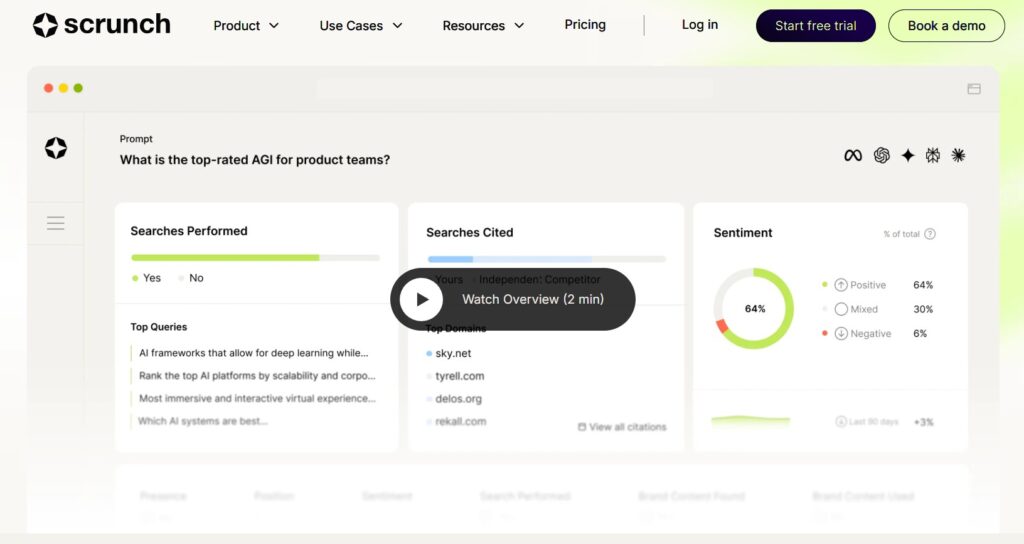
Scrunch AI is more than an AI visibility tracker. It is built around the idea of Agent Experience Optimization, which focuses on how AI agents discover, read, interpret, cite, and send traffic to a website.
Its most important product is the Agent Experience Platform, commonly called AXP. AXP gives businesses control over what AI crawlers and AI agents see when they visit pages. This makes Scrunch AI a strong Mentions.so alternative for enterprise teams that want to improve the way their websites serve AI systems without changing the human-facing version of their site.
Key Features
-
Agent Experience Platform, or AXP: AXP detects AI agent traffic and can serve an AI-optimized version of a webpage directly to AI bots. The human visitor continues to see the normal website, while the AI agent receives a cleaner, more structured version of the content.
-
AI-friendly content delivery: AXP can remove unnecessary scripts and page elements that provide little value to AI agents. It can serve structured content that is easier for AI systems to parse, understand, and cite.
-
Path-level controls: Teams can apply different rules to specific pages or groups of pages. For example, a company can create different AXP settings for product pages, documentation, resource articles, comparison pages, and support content.
-
Block, redirect, and script controls: AXP gives users options to block certain agent behavior, redirect AI agents, or strip scripts from the version of a page delivered to AI bots.
-
Human-versus-agent comparison preview: Users can compare the HTML delivered to human visitors with the version delivered to AI agents. This helps web and SEO teams understand exactly what an AI crawler receives.
-
Version history and rollback: Scrunch AI keeps a change log for AXP updates. Teams can review earlier versions and restore a previous configuration when needed.
-
AI visibility monitoring: The platform tracks brand mentions, share of voice, prompt coverage, citation performance, and visibility trends across AI platforms.
-
Persona-based tracking: Scrunch AI lets users organize prompts by persona, topic, funnel stage, and custom tags. A company can separate prompts for small businesses, enterprise buyers, agencies, technical users, and existing customers.
-
Page audits: The tool reviews which pages are cited by AI engines and identifies content or technical gaps that may affect AI visibility.
-
Prioritized recommendations: Scrunch AI connects prompt data, citations, agent traffic, page signals, and AI search trends to highlight pages that may have the most impact when improved.
-
Responses API: The API can return complete AI answers, citations, competitor mentions, sentiment, and prompt metadata. This is valuable for teams that want to send AI visibility data into their own dashboards or data warehouse.
-
Agent traffic and AI referrals: Scrunch AI helps companies understand when AI agents visit their site and how AI-driven visitors interact with the website.
Pricing
Scrunch AI’s Core plan starts at $250 per month when billed annually. Monthly billing is available at a higher effective cost.
The Core plan includes 125 prompts across ChatGPT, Perplexity, Google AI, and Copilot. It also includes three user licenses, five site audits each month, API access, advanced features, and dedicated support.
Scrunch AI offers a seven-day Core trial. Enterprise pricing is available for brands that need more prompt capacity, custom reporting, additional sites, SSO, larger teams, and advanced platform support.
Who Should Choose Scrunch AI?
Choose Scrunch AI if you are part of an enterprise marketing, SEO, product, or web team. It is particularly useful when you need to understand AI traffic, improve AI crawler experiences, analyze citations, and control the content that AI agents receive.
Scrunch AI vs Mentions.so
Mentions.so helps teams understand whether AI platforms mention their brand. Scrunch AI expands the work into AI agent experience, AI-focused content delivery, page-level controls, crawler behavior, persona reporting, and AI traffic analysis.
3. AthenaHQ: Best for Guided AI Search Actions
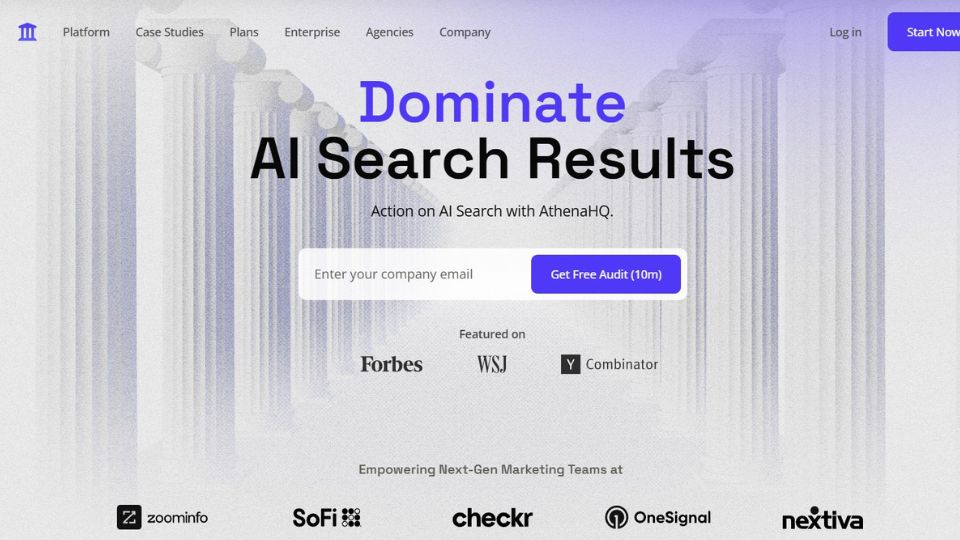
AthenaHQ is an AI search platform that helps brands measure visibility and prioritize actions. It is designed for teams that want to connect AI visibility data with content improvements, citation opportunities, brand perception analysis, and technical site work.
The platform is useful for businesses that want an organized way to decide what to improve first. Rather than simply showing a list of brand mentions, AthenaHQ helps teams identify missing content, citation gaps, and opportunities tied to their AI search visibility.
Key Features
-
AI visibility tracking: AthenaHQ tracks brand presence across AI search platforms and helps teams review how they appear for important prompts.
-
Prompt analysis: Users can track selected AI search prompts and compare their brand with competing businesses.
-
Content opportunity identification: The platform identifies topics and questions where a business may need better coverage. This can include missing product information, incomplete comparison pages, weak use-case content, or unanswered customer questions.
-
Oracle discrepancy detection: Oracle helps users find gaps between how a brand wants to be represented and how AI systems actually describe it. This is useful for identifying inaccurate details, unclear messaging, or missed brand attributes.
-
Athena Citation Engine, or ACE: ACE evaluates the likelihood that a piece of content could be cited by AI models. It is built to help teams assess content before or after publishing.
-
Citation opportunity analysis: AthenaHQ helps users study the sources connected to AI answers. This supports content and digital PR teams that want to understand which types of references are appearing in their category.
-
Technical AI search support: The platform includes support around AI crawler access and files such as robots.txt and llms.txt. This helps teams review how their site communicates with crawlers and AI systems.
-
AI search recommendations: AthenaHQ provides recommended actions based on visibility and content findings. Teams can use these recommendations to prioritize pages, topics, technical checks, and citation opportunities.
-
Team collaboration: The platform supports unlimited members on its listed plans, allowing content, SEO, brand, web, and leadership teams to work together.
Pricing
The Starter plan costs $295 per month. AthenaHQ uses a credit-based model, so usage depends on the number of prompts, AI responses, and analyses run by the account.
Teams with larger requirements can choose higher plans or request custom pricing. Before choosing a plan, estimate how many AI responses and prompt runs your team needs each month.
Who Should Choose AthenaHQ?
Choose AthenaHQ if you want AI search reporting linked to a clear improvement plan. It works well for marketing teams that need help prioritizing content updates, citation work, AI crawler settings, and brand-message improvements.
AthenaHQ vs Mentions.so
Mentions.so gives teams brand mention tracking, sentiment data, and AI visibility insights. AthenaHQ is a stronger choice for teams that want detailed AI search recommendations, content opportunity analysis, Oracle discrepancy detection, and citation likelihood assessment through ACE.
4. Peec AI: Best for Detailed AI Search Analytics
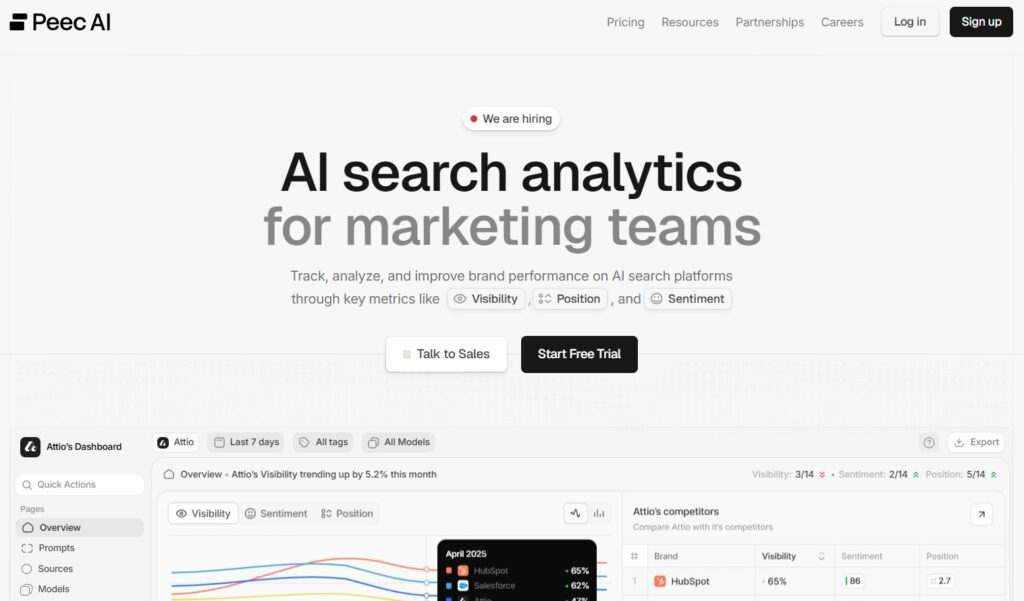
Peec AI is a detailed AI search analytics platform for marketing teams and agencies. It gives users a broad view of how their brand appears in AI answers, including visibility, position, sentiment, share of voice, sources, citations, AI referrals, bot activity, shopping results, and competitor performance.
Peec AI is a good Mentions.so alternative for businesses that want to go beyond basic mention tracking. Its feature set is built for teams that want to understand the prompts, citations, pages, products, and sources influencing their AI search presence.
Key Features
-
Visibility overview: Peec AI tracks visibility, average position, sentiment, and share of voice against competitors. Users can review these metrics by AI model, topic, country, competitor, and brand.
-
Brand insights: The platform shows how a business performs across models, topics, geographic markets, and competitor groups.
-
Prompt suggestions: Peec AI recommends prompts worth tracking based on brand context and coverage gaps. This helps teams find questions they may have missed.
-
Keyword-to-prompt generation: Users can create prompts from keywords and organize them by topics, categories, personas, and intent.
-
Branded and non-branded prompt classification: The platform separates prompts where the brand is named from prompts where the buyer is researching a category without naming a company.
-
Intent classification: Peec AI can classify prompts as informational, commercial, or transactional. This helps marketing teams understand which prompts are closest to a buying decision.
-
Source analytics: Users can review cited domains, subdomains, URLs, retrievals, citation share, and source classifications. Sources can be grouped into categories such as competitor, editorial, reference, and user-generated content.
-
Fanout overview: Peec AI shows search and shopping sub-queries used by AI engines. This helps users see the related searches behind AI-generated answers.
-
Gap analysis: The platform identifies sources that mention competitors but do not mention your brand. Users can review those opportunities by source, domain, subdomain, URL, and host.
-
Recommended actions: Peec AI groups actions into owned and earned opportunities. Owned actions may involve improving your own content, while earned actions may involve building third-party references and authority.
-
Peec Agent: The Peec Agent uses company context, project context, user memory, pre-built skills, and custom skills to help users work with AI visibility data.
-
AI Shopping Analytics: Ecommerce brands can upload a product catalog from Shopify, CSV files, or Google Merchant Center. Peec AI then tracks visibility, position, and win rate at SKU level.
-
Shopping source visibility: Users can see which domains and URLs AI engines retrieve when recommending a product.
-
Ads library: The platform identifies prompts that contain sponsored placements and shows the advertisers that appear.
-
Local GEO: Peec AI includes local AI search analysis for brands that need location-based monitoring.
-
Crawlability audit: The tool can review whether robots.txt allows, partly allows, or blocks more than 40 AI bots.
-
Crawl insights: Users can study which bots visit which pages, how frequently they visit, and the status code returned by the website.
-
AI referrals: Peec AI tracks visits arriving from AI assistants. This is useful for measuring the traffic side of AI visibility.
-
Reports and integrations: The platform includes shareable dashboards, automated reporting, Looker Studio integration, API access, CSV exports, and Model Context Protocol support.
Pricing
Peec AI’s Starter plan costs $80 per month when billed annually, or $95 per month with monthly billing. It includes 50 prompts, one project, three selected AI models, daily tracking, unlimited users, and chat support.
The Pro plan costs $205 per month with annual billing, or $245 per month with monthly billing. It includes 150 prompts, two projects, three countries, three selected models, daily tracking, unlimited users, and chat plus email support.
The Advanced plan costs $420 per month with annual billing, or $495 per month with monthly billing. It includes 350 prompts, five projects, multi-country tracking, Looker Studio integration, unlimited users, and expanded reporting options.
Enterprise pricing is available for businesses that need custom prompt volumes, all models, API access, SSO, unlimited projects, and dedicated support.
Who Should Choose Peec AI?
Choose Peec AI if you need detailed AI search analytics. It is particularly useful for ecommerce teams, enterprise marketing teams, agencies, and brands that need prompt research, source intelligence, citations, shopping data, crawl data, and AI referral measurement.
Peec AI vs Mentions.so
Mentions.so is useful for tracking brand mentions and visibility across AI platforms. Peec AI offers a deeper analytics setup for source analysis, fanouts, citation share, AI shopping, agent analytics, AI referrals, crawlability, local GEO, and campaign reporting.
5. Profound: Best for AI Search Content Operations
Profound is an AI search marketing platform that combines AI visibility analysis with AI agent workflows. It is designed for teams that want to run AEO content programs at scale, from topic research and citation analysis through drafting, review, and publishing.
The platform’s strongest feature is its Agent Builder. It allows marketing teams to create custom workflows without code and use them for repeatable content and AI search tasks.
Key Features
-
No-code Agent Builder: Profound provides a drag-and-drop builder for creating marketing workflows. Users can create custom agents without relying on developers.
-
Pre-built agent templates: The platform includes ready-made agents for common tasks such as content refreshes, AEO FAQ generation, competitive research, and new content creation.
-
Content Refresh Agent: This agent identifies pages with declining AI citation rates and creates updated versions designed to improve their chances of being cited again.
-
AEO FAQ Generator: The tool can create structured FAQ content around topics that AI engines frequently answer.
-
Competitive Research Agent: Users can monitor what AI engines cite in their category and create briefs around content opportunities.
-
Net-new content creation: Profound can create article drafts and content assets from a selected topic. The workflow is built around the content formats and source patterns that AI engines cite for that topic.
-
Citation and format analysis: Profound analyzes top-cited pages and recommends content formats that may fit the topic. For example, a topic may need a comparison table, an expert guide, a product explanation, a checklist, or an FAQ.
-
Deep research workflows: Agents can run web page analysis, AI prompt tasks, answer engine insights, API calls, citation research, competitive research, and knowledge base retrieval.
-
Brand kit and knowledge base: Users can add brand guidelines, tone instructions, and knowledge base material. This helps teams create content that reflects the company’s products and messaging.
-
Human approval before publishing: Profound includes a review step before an agent publishes content. This allows editors and marketing teams to check content before it goes live.
-
CMS integration: Approved content can be sent to connected CMS tools, reducing manual copy and paste work.
-
Sheet-based agent workflows: Teams can run agents across many inputs using spreadsheet-style workflows. This is helpful when a large content team needs to process multiple topics, products, pages, or markets.
Pricing
Profound’s Starter plan begins at $99 per month. Its Growth plan begins at $399 per month.
Enterprise plans are available for larger organizations that need higher volumes, more workspaces, advanced reporting, custom support, and broader access to the platform’s agent workflows.
Who Should Choose Profound?
Choose Profound if you need an AI search platform that supports large-scale content operations. It is well suited to enterprise SEO teams, content teams, publishers, and companies that want to automate repeatable research, briefing, drafting, optimization, and publishing tasks.
Profound vs Mentions.so
Mentions.so focuses on measuring and improving AI brand mentions. Profound is a stronger option when a business needs AI visibility data connected to a no-code agent system for content research, citation analysis, content refreshes, FAQ creation, and CMS publishing.
6. LLMrefs: Best for Keyword-First AI Tracking
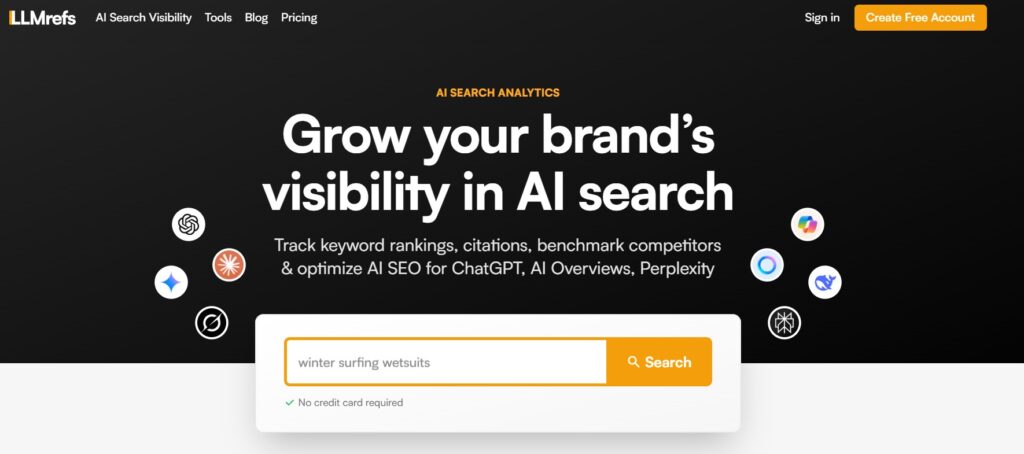
LLMrefs is built for SEO teams that prefer to start with keywords rather than manually creating a long list of prompts. The platform turns keyword themes into conversation-style questions and then tracks how brands appear in AI answers.
This approach is helpful for businesses that already organize their SEO strategy around keyword clusters. It allows them to use those same clusters to study AI mentions, citations, source pages, competitors, and answer position.
Key Features
-
Keyword-first monitoring: Users begin by adding keyword themes instead of writing every prompt individually.
-
Conversation-based prompt creation: LLMrefs turns keyword sets into natural questions that people may ask ChatGPT, Perplexity, Gemini, Google AI Overviews, Claude, Grok, and Copilot.
-
Brand mention tracking: The platform measures whether a brand appears in AI-generated answers and how often it is included.
-
Citation tracking: Users can see which domains and pages AI systems cite for a prompt.
-
Competitor analysis: LLMrefs helps users study competitors that appear in AI answers and identify topics where competitors have stronger visibility.
-
Share of voice data: Teams can compare their AI presence against competitors across prompt groups and keyword themes.
-
Aggregated ranking data: The platform combines results across models to give teams a broader view of answer position.
-
Prompt review workflow: Users can review automatically generated prompts, remove irrelevant ones, and add more customer-focused questions.
-
Country targeting: Teams can organize projects by market and track AI visibility for different countries.
Pricing
LLMrefs offers a free-to-start plan. Its All-in-One plan costs $79 per month.
The paid plan includes 500 prompts, full access to supported AI engines, unlimited projects, and unlimited user seats. A seven-day free trial is also available for users who want to test the paid experience.
Who Should Choose LLMrefs?
Choose LLMrefs if keyword research is already central to your SEO workflow. It is a good fit for SEO agencies, content teams, consultants, and businesses that want to connect traditional keyword planning with AI search monitoring.
LLMrefs vs Mentions.so
Mentions.so is built around tracking a brand’s presence in AI answers. LLMrefs is a better fit for teams that want keyword-first tracking, automatic conversation prompts, citation research, source analysis, and SEO-oriented topic planning.
7. OtterlyAI: Best for International AI Search Monitoring
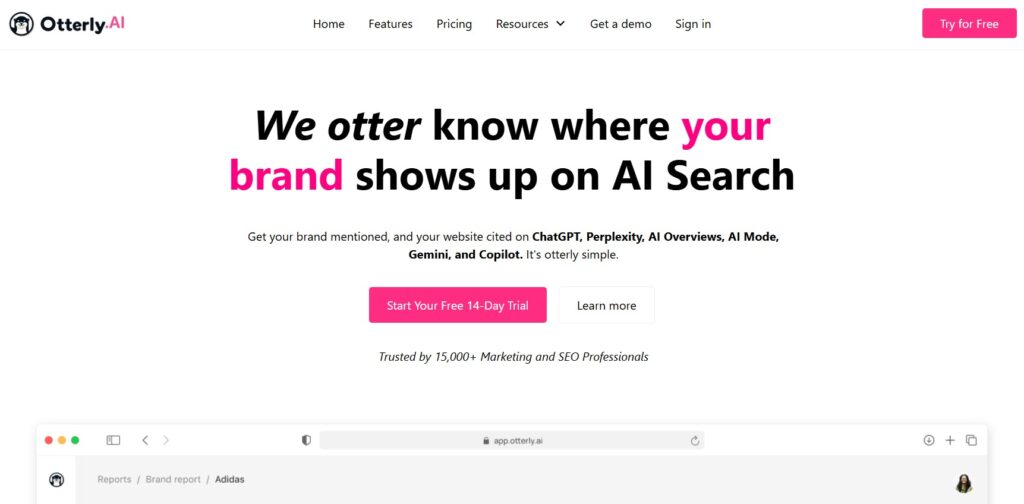
OtterlyAI is an AI search monitoring platform for businesses that want a practical and affordable way to track AI visibility. It supports major AI search engines and includes features for citation tracking, content analysis, competitive research, and country-level monitoring.
It is a useful Mentions.so alternative for brands with customers in different markets. AI responses can change based on country, language, local intent, and search platform, so international monitoring can be valuable for global businesses.
Key Features
-
Multi-engine tracking: OtterlyAI tracks visibility across ChatGPT, Perplexity, Google AI Overviews, Google AI Mode, Gemini, and Microsoft Copilot.
-
Brand mention monitoring: Users can see where AI search platforms mention their brand and how their visibility changes over time.
-
Citation tracking: The tool identifies the sources linked or referenced in AI-generated answers.
-
Citation position tracking: OtterlyAI helps users see where a cited brand or source appears in the answer. This gives more context than a simple citation count.
-
GEO content audit: The platform reviews content for generative engine optimization. It helps users identify pages that may need clearer structure, stronger topical coverage, or more helpful information.
-
Prompt monitoring: Teams can track important prompts based on services, products, competitor names, customer questions, and commercial topics.
-
Query fanouts: Users can identify related questions around their main topics and expand their AI search tracking program.
-
Country and language monitoring: OtterlyAI supports monitoring across more than 65 countries and languages.
-
AI shopping and ads: Businesses can study AI-related product and shopping visibility, as well as selected AI advertising results.
-
AI crawlability checks: The platform helps teams understand how AI crawlers may access their content.
-
Enterprise reporting: Larger organizations can use team-oriented monitoring, country-specific reporting, and brand-level AI search analysis.
Pricing
OtterlyAI’s Lite plan starts at $29 per month and includes 15 prompts. The Standard plan costs $189 per month and includes 100 prompts.
The Premium plan costs $489 per month and includes 400 prompts. OtterlyAI also offers a free trial, though users should check the current pricing page for the active trial details.
Who Should Choose OtterlyAI?
Choose OtterlyAI if you need affordable AI search monitoring with strong international coverage. It works well for small teams, agencies, global brands, consultants, and businesses that want citation tracking and GEO audits without an enterprise contract.
OtterlyAI vs Mentions.so
Mentions.so tracks brand visibility across AI platforms. OtterlyAI is more suitable for teams that need GEO audits, citation-position analysis, international monitoring, AI shopping tracking, and AI crawler checks.
8. SE Ranking AI Search Toolkit: Best for SEO Teams
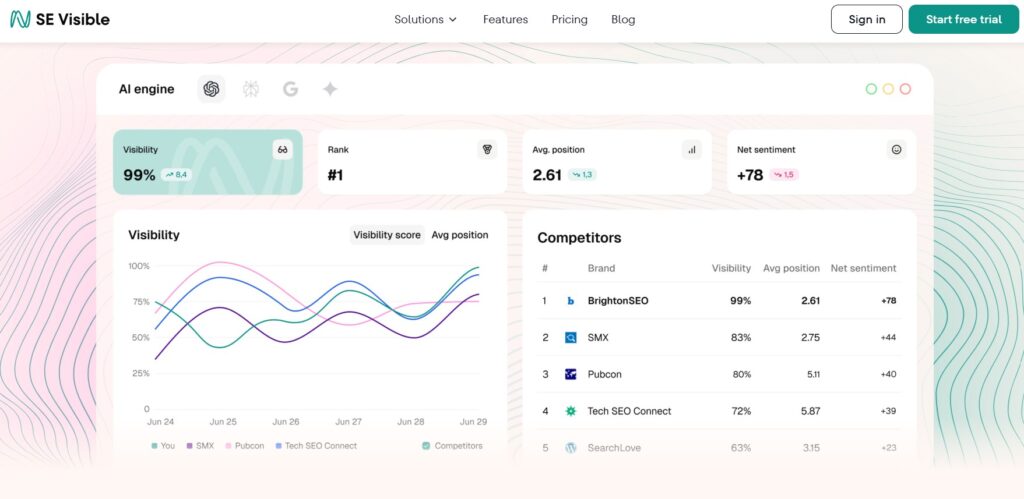
SE Ranking AI Search Toolkit brings AI visibility tracking into a wider SEO platform. This is useful for teams that do not want a separate tool for AI mentions, keyword rankings, website audits, backlinks, competitor research, and client reporting.
The platform is a good Mentions.so alternative for agencies and SEO teams that already use conventional SEO data every day. It allows them to compare what happens in traditional search with what happens in Google AI Overviews, AI Mode, ChatGPT, and Gemini.
Key Features
-
Google AI Overview tracking: SE Ranking tracks whether a brand appears in Google AI Overviews for selected prompts.
-
Google AI Mode tracking: The platform monitors visibility in Google AI Mode, helping users understand their presence in Google’s AI search experience.
-
ChatGPT and Gemini monitoring: Users can track brand mentions and links across ChatGPT and Gemini.
-
Full answer analysis: The API can return full AI answer text, links, cited pages, mentioned brands, and prompt information.
-
Mention and link tracking: Teams can see whether their brand is mentioned and whether their domain is linked in AI answers.
-
Share of voice reporting: Users can compare their AI visibility with competitors across prompt groups.
-
Top-three presence tracking: The platform can measure whether a brand appears among the first three recommendations or mentions in an AI answer.
-
Historical statistics: Teams can review changes in AI visibility and mention performance over time.
-
Prompt opportunity insights: SE Ranking provides recommendations around prompts worth adding to a tracking project.
-
Traditional SEO tools: The platform includes rank tracking, keyword research, site auditing, backlink checking, competitor research, and reporting.
-
API access: Agencies and enterprise teams can use the API to retrieve AI visibility data and connect it to internal dashboards.
Pricing
SE Ranking offers a 14-day free trial. Its AI Search add-on starts at $71.20 per month with annual billing.
The final cost depends on the selected SEO plan, tracked keywords, number of projects, AI visibility package, and reporting requirements. Teams should calculate the combined cost if they need both a core SE Ranking SEO subscription and the AI Search add-on.
Who Should Choose SE Ranking?
Choose SE Ranking if you already use an SEO suite and want to add AI visibility tracking without moving to another platform. It is especially useful for agencies, SEO teams, and businesses that need AI search data alongside rank tracking, technical audits, backlinks, and reporting.
SE Ranking vs Mentions.so
Mentions.so is focused on AI brand mention tracking and optimization insights. SE Ranking is a stronger choice for users who want AI visibility data connected to traditional SEO tools, keyword research, audits, backlinks, reports, and client management.
9. Semrush AI Visibility Toolkit: Best for Semrush Users
Semrush AI Visibility Toolkit is built for businesses that want to track AI search performance inside the Semrush ecosystem. It connects AI visibility data with SEO, content, advertising, competitive research, and reporting workflows.
Its strongest feature is prompt research. Semrush has a large prompt database that helps marketers find the questions people ask AI search engines, understand the intent behind those questions, and identify topics with potential value.
Key Features
-
Prompt Research: Semrush helps users discover and prioritize AI search prompts. It shows topic demand, estimated difficulty, user intent, and source domains that AI platforms cite.
-
Large prompt database: The toolkit uses a database with more than 317 million prompts and AI responses across ChatGPT, Gemini, Google AI Overviews, and Google AI Mode.
-
Regional databases: Semrush supports AI visibility analysis across 117 regional databases. This helps companies compare AI search behavior by country and market.
-
Prompt Tracking: Users can track selected prompts daily in ChatGPT Search, Google AI Mode, Google AI Overviews, and Gemini.
-
Visibility and average position: The tool measures whether a domain appears in AI answers and its average position for tracked prompts.
-
AI competitor analysis: Businesses can compare their brand with competitors and identify which websites or brands appear most often for important AI search topics.
-
Source domain analysis: Users can study the websites AI tools cite. This helps teams understand which source types and content formats receive attention in their category.
-
AI visibility reporting: The platform creates reports for AI visibility, traffic impact, topic performance, regional performance, and competitor changes.
-
Daily updates: Semrush updates its AI visibility data daily on a rolling basis.
-
AI-ready site audit: The toolkit can help teams assess website readiness for AI search and identify areas that may need attention.
-
Semrush ecosystem access: Users can connect AI visibility work with keyword research, site audits, backlink data, content tools, advertising research, and reporting features.
Pricing
Semrush AI Visibility Toolkit starts at $99 per month per domain when billed annually.
This cost is separate from a standard Semrush SEO plan. Businesses that want both conventional SEO features and AI Visibility Toolkit access should calculate the total subscription cost before choosing a plan.
Who Should Choose Semrush?
Choose Semrush AI Visibility Toolkit if your business already uses Semrush. It is useful for marketing teams that want AI prompt research and AI visibility tracking connected to their existing SEO and content workflow.
Semrush vs Mentions.so
Mentions.so is focused on monitoring AI brand presence. Semrush is a better fit for businesses that need prompt research, regional AI search data, source-domain analysis, AI reporting, and a complete SEO platform in the same account.
10. Rankscale AI: Best for Broad AI Engine Coverage
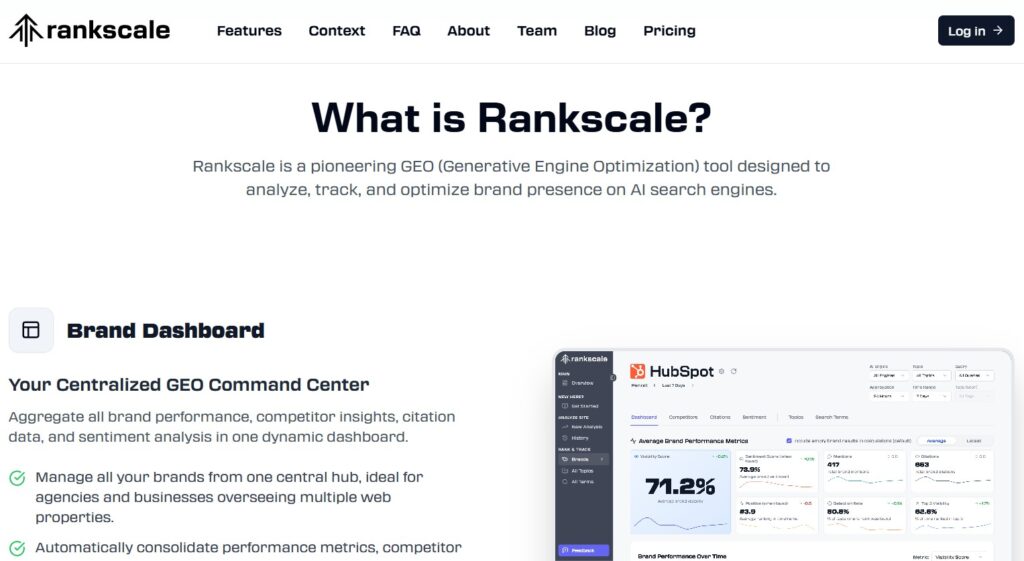
Rankscale AI is an AI visibility platform that tracks brands, citations, competitors, products, and ads across more than 17 AI engines. It is useful for teams that want broad coverage and flexible testing across different models, countries, product queries, and customer questions.
The platform uses a credit-based model. This can work well for teams that want to choose how often prompts run and which engines they want to monitor.
Key Features
-
17+ AI engine coverage: Rankscale AI tracks a broad range of AI platforms, including ChatGPT, Claude, Gemini, Perplexity, and Google AI Overviews.
-
AI visibility score: The platform measures how often and how prominently a brand appears across AI search engines.
-
AI rank tracking: Users can track their position in AI-generated answers and compare their placement with competitors.
-
Citation tracking: Rankscale AI shows which pages, domains, and third-party sources appear in AI answers for selected prompts.
-
Citation share: Teams can measure the share of citations that point to their own domain compared with third-party domains and competitor websites.
-
Competitor analysis: Users can compare brand visibility, recommendation frequency, citations, and share of voice with competing businesses.
-
AI shopping analysis: Ecommerce brands can study product picks, merchant visibility, retailer placement, and shopping-related citations in ChatGPT Shopping, Google AI Mode Shopping, and Bing Copilot Shopping.
-
Product and seller analysis: The platform helps users see which products and sellers appear when customers ask AI systems where to buy a product.
-
Page audit: Rankscale AI evaluates individual pages for human trust and AI citation potential. It provides prioritized suggestions around page clarity, trust signals, and citation readiness.
-
Query fanout research: Teams can expand key prompts into related AI search questions and discover additional tracking opportunities.
-
Regional and language tracking: Users can review AI visibility across countries, regions, and languages.
-
White-label options: Agencies can use white-label reporting and platform features for client work.
Pricing
Rankscale AI uses credits to power AI engine queries. Its Pro plan costs $99 per month and includes 1,200 credits each month.
The company also lists lower-cost plans from €20, depending on the plan and included credit volume. A seven-day trial is available, and credit use can vary based on model choice, prompt volume, monitoring frequency, and AI search feature used.
Who Should Choose Rankscale AI?
Choose Rankscale AI if you need to monitor many AI engines and want flexible testing. It is a good fit for agencies, ecommerce brands, international businesses, and teams that care about citations, AI shopping, product discovery, and multi-model monitoring.
Rankscale AI vs Mentions.so
Mentions.so tracks brand mentions, competitor visibility, sentiment, and action opportunities. Rankscale AI is a better match for teams that need coverage across many AI engines, credit-based monitoring, AI shopping analysis, product visibility, citation share, and page-level trust evaluations.
How I Selected the Best Mentions.so Alternatives
AI platform coverage
I checked how many AI engines each tool supports, including ChatGPT, Perplexity, Gemini, Claude, Google AI Overviews, Google AI Mode, Copilot, and other relevant platforms. Broader coverage matters for businesses that want to compare visibility across multiple AI search experiences.
Prompt and keyword tracking
I reviewed how each platform handles prompts and keywords. Some tools start with keywords and generate prompts, while others require manual prompt entry. I considered prompt limits, keyword-to-prompt fanouts, daily tracking frequency, and the ability to organize prompts by topic, persona, or intent.
Brand mention and share-of-voice reporting
I looked at how each tool measures brand presence in AI answers. This includes mention rate, average position, share of voice against competitors, and visibility trends over time. Strong reporting helps teams understand whether their AI search presence is improving.
Citation and source analysis
I evaluated how well each platform tracks cited pages, domains, and source types. This is important because AI tools often rely on third-party sources when forming answers. Good citation analysis helps content and PR teams identify authority-building opportunities.
Competitor monitoring
I considered how each tool handles competitor visibility, including share of voice comparisons, competitor citations, prompt-level competitor performance, and visibility gaps where competitors appear but your brand does not.
AI traffic and conversion attribution
I checked whether platforms offer AI referral tracking, agent traffic analysis, or AI shopping analytics. This helps businesses connect AI visibility with website visits, product discovery, and revenue-related outcomes.
Content optimization and GEO recommendations
I reviewed whether each tool provides actionable recommendations for content, technical setup, citations, and brand messaging. Tools that suggest specific pages to update, topics to cover, or citation opportunities are more useful than tools that only show raw visibility scores.
Reporting, integrations, and agency features
I considered reporting capabilities, API access, client workspaces, white-label options, and integrations with tools like Looker Studio, Slack, Notion, and CMS platforms. These features are especially important for agencies and larger teams.
Pricing and overall value
I compared starting prices, prompt or credit limits, included projects, user seats, countries, AI engines, and trial availability. The goal was to identify tools that offer strong value for freelancers, small teams, agencies, and enterprise brands at different budget levels.
FAQs: Mentions.so Alternatives
What is the best Mentions.so alternative?
Radarkit AI is a strong overall Mentions.so alternative for agencies and content teams because it combines AI visibility monitoring with agents that support content, outreach, AI chat, Reddit, and local visibility work.
Is Mentions.so worth using?
Mentions.so can be a good choice for businesses that want to track brand visibility across several AI platforms. Its plans start at $49 per month and include daily updates, competitor monitoring, AI traffic analytics, and unlimited seats.
What is the cheapest Mentions.so alternative?
Rankscale AI lists plans from €20, while Radarkit AI and OtterlyAI both start at $29 per month. The best value depends on how many prompts, brands, projects, countries, engines, and users your business needs.
Can AI visibility tools improve ChatGPT mentions?
AI visibility tools do not control ChatGPT or any other AI platform. They help businesses find missing mentions, track competitors, review cited sources, identify content gaps, and organize actions that can support stronger future visibility.
What should I measure besides Mentions.so brand mentions?
Measure competitor visibility, citations, source URLs, answer position, sentiment, country-level results, prompt coverage, AI referral traffic, and conversions. These metrics provide a fuller picture of how AI platforms present your business.
Are AI visibility tools different from SEO tools?
Yes. SEO tools mainly focus on keyword rankings, backlinks, site health, organic traffic, and search engine performance. AI visibility tools focus on how brands appear in answers generated by chatbots, answer engines, AI Overviews, and AI-led search experiences.
Final Verdict
Mentions.so is a helpful platform for tracking brand mentions and competitor presence across AI search platforms. It is a good option for teams that want daily monitoring, AI visibility insights, sentiment analysis, and organized action items.
The best Mentions.so Alternatives depends on your main goal. Radarkit AI is a strong option for agencies and content teams that want action-oriented workflows.